Aqüeducte de Santa Llúcia, Gothic aqueduct in Morella, Spain
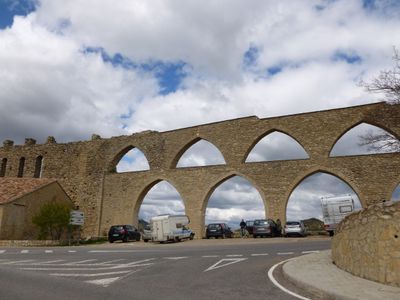
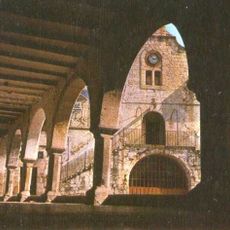
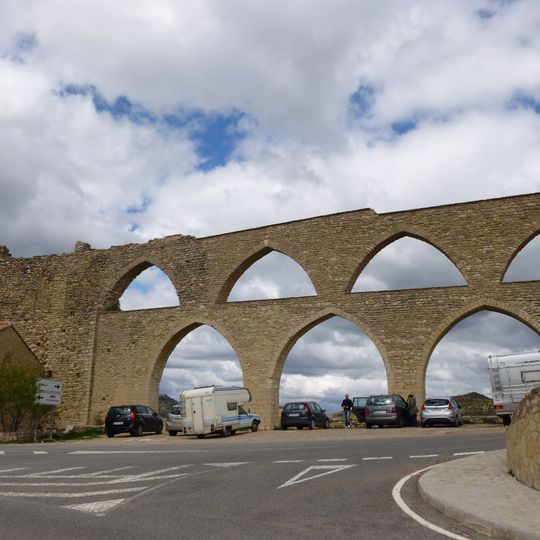
The Aqüeducte de Santa Llúcia is a 14th-century water channel that carried water from the Vinatxos spring to the aljibe under Plaça de La Font in Morella. It combines buried masonry tunnels with two arched sections: the Arcs de Santa Llúcia, 120 m long and 14.5 m high with two rows of pointed arches, and the Arcs de La Pedrera, 140 m long and 13 m high, with pointed arches below and round arches above.
In 1273 James I granted Morella the water rights of the Vinatxos spring. In 1315 James II authorised the Consell de Morella to build an aqueduct to the Pla de Sant Llàcer; the present arcades were raised in 1338, and water reached the Pla del Sol in 1359. Arches near Santa Llúcia collapsed in 1391 and were repaired by Guillem Palma; further repairs are recorded in 1421, 1739 and 1845.
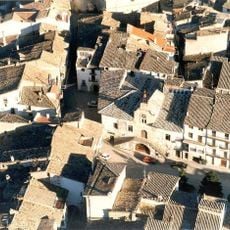
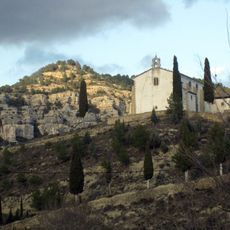
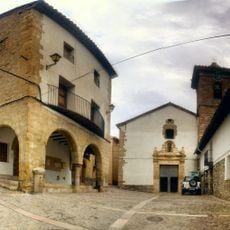
The aqueduct is also called Aqüeducte de Santa Llúcia and Séquia Reial in Valencian. Its water fed the aljibe beneath Plaça Vella, whose medieval stone paving survives; a spout on the reservoir facade poured water into livestock troughs that are now much deteriorated. The Vinatxos spring itself is today a cattle watering place.
The aqueduct runs outside the walled centre, with two surviving arch sections: Santa Llúcia, 120 m long and 14.5 m high, and La Pedrera, 140 m long and 13 m high. The start of the channel was lost in 1992 when earthworks for the new road destroyed a buried stretch. The spring of Vinatxos now serves as a livestock watering trough.
The aqueduct's water was not carried on top of the arches but through buried masonry tunnels with barrel vaults, following the contour lines; the arches only bridged the valleys. In 1992 earthworks for a new road destroyed a long buried stretch, erasing any trace of the aqueduct's starting point.
The community of curious travelers
AroundUs brings together thousands of curated places, local tips, and hidden gems, enriched daily by 93,454 contributors worldwide.