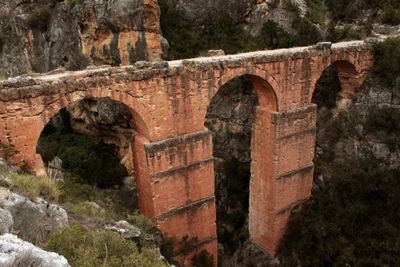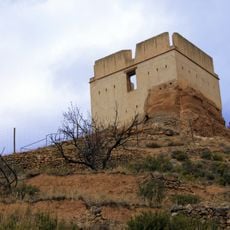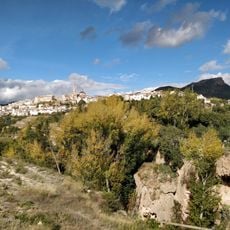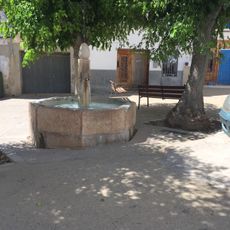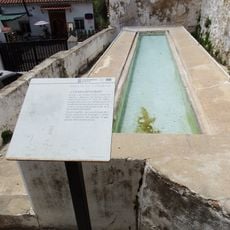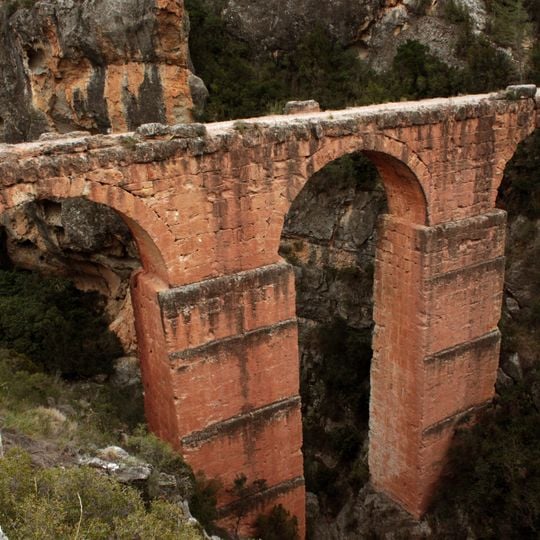
Acueducto de Peña Cortada, Roman aqueduct in Calles and Tuéjar, Spain.
The Peña Cortada Aqueduct is a Roman water conduit that spans four municipalities through bridges and tunnels carved directly into rock. Its construction integrates with the mountainous terrain of the Valencia region, adapting to natural features across the landscape.
Built during the first century AD, this water system originally extended about 29 kilometers to serve multiple Roman settlements in the Los Serranos region. The network represented a major investment in infrastructure to connect distant communities.
The aqueduct reflects Roman engineering skill and remains part of how locals understand their region's ancient past. Walking along it today, you can see how such structures shaped settlement patterns in these mountains.
A circular hiking trail of approximately 10 kilometers follows the Tuéjar River and passes through the Rambla de Alcotas, allowing you to explore different sections. This route gives you a good sense of how the structure connects across the terrain.
The Barranco de la Cueva del Gato Bridge stands 18 meters tall with three stone arches reaching across the ravine. This impressive height allowed Romans to carry water over deep valleys without disrupting the river below.
The community of curious travelers
AroundUs brings together thousands of curated places, local tips, and hidden gems, enriched daily by 91,979 contributors worldwide.