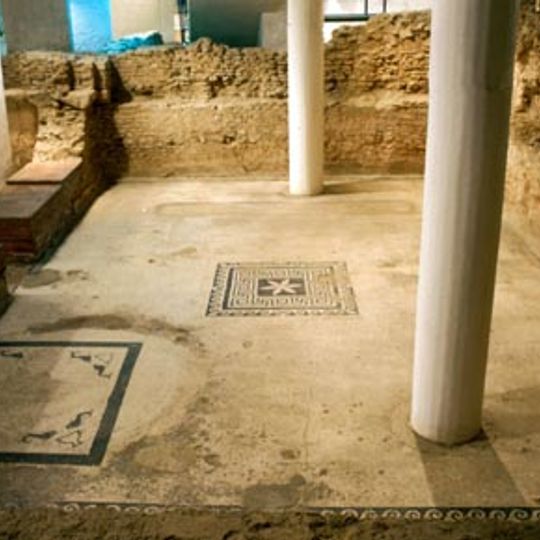
Baetulo, Roman archaeological site in Badalona, Spain.
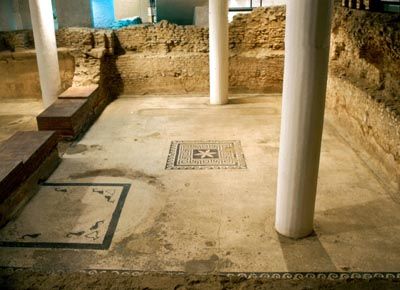
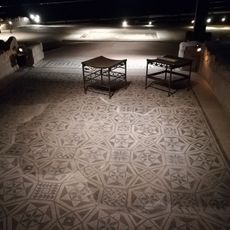
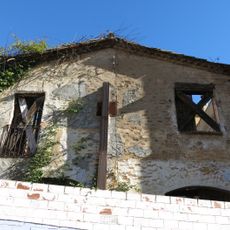
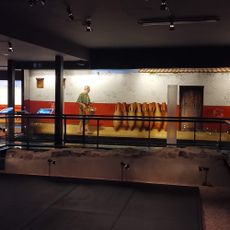
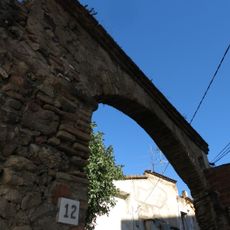
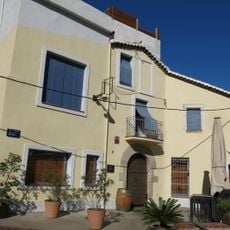
Baetulo is a Roman archaeological site in present-day Badalona, preserving remains of city walls, thermal baths, residential buildings, and water infrastructure. The excavated structures and objects found on site show how this Roman settlement was organized and how its inhabitants lived.
Baetulo was founded ex novo around 100 BC on a hill between the streams of Folc and Matamoros, near the sea. It was a planned Roman town with a wall and an orthogonal street grid, and its economy centred on wine production and export. It became a municipium at the end of the 1st century AD and remained inhabited until the 6th century.
Baetulo's population was largely Iberian rather than Italic settlers: almost all inscriptions from the first half of the 1st century BC are in Iberian, and the known citizens' names are Iberian. The town's wealth came from wine grown in surrounding villas and exported, a trade that peaked in the Augustan period.
Much of the site is open to the sky, so visiting in the cooler morning hours or on overcast days makes the experience more comfortable. Wear sturdy shoes, as the ground between excavated areas can be uneven.
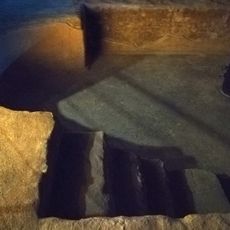
The thermal building at Baetulo is one of the oldest known Roman baths on the Iberian Peninsula, built when Roman presence in the region was still new. This makes it an early example of how Roman urban planning was applied far from the center of the empire.
The community of curious travelers
AroundUs brings together thousands of curated places, local tips, and hidden gems, enriched daily by 94,932 contributors worldwide.