Ceràmica i mosaics de l'Hospital de la Santa Creu i Sant Pau, Ceramic and mosaic decorations at Hospital de Sant Pau in El Guinardó, Barcelona, Spain
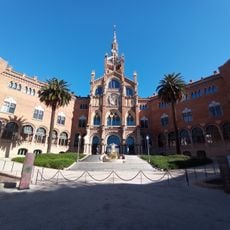
The ceramic and mosaic decoration of the Hospital de la Santa Creu i Sant Pau is concentrated in the administration building, where sixteen exterior panels narrate the hospital's founding and interior mosaics cover floors, walls, ceilings and columns of the ground floor and first-floor noble rooms. In the nursing pavilions, glazed ceramic sheathes walls for hygiene, with plain white and yellow tiles set at 45 degrees and floral tiles interspersed. Outside, painted ceramic frames doors and windows, while glazed pieces crown pinnacles, chimneys and finials.
The hospital was built between 1902 and 1930: Lluís Domènech i Montaner designed the first phase, and from 1920 his son Pere Domènech i Roura continued the work. The ceramics came from several workshops: Cristòfol Guillamont of Alcora made the blue-and-white hemispherical pieces, Elies Peris of Onda the stencilled tympana, and Pujol i Bausis of Esplugues de Llobregat the painted vault ceramics. Twentieth-century changes to hospital care destroyed the tiles in many sickrooms.
The sixteen mosaic panels on the administration building's exterior tell the founding story of the hospital, blending artistic expression with institutional memory. These artworks shaped how people understood the building's purpose and showed how beauty served practical needs at the same time.
The ceramic decoration is concentrated in the administration building: sixteen panels on the exterior tell the founding story, while inside, mosaics cover floors, walls, ceilings and columns of the ground floor and the first-floor noble rooms. In the patient pavilions, look for glazed ceramic elements on pinnacles, chimneys and roof finials, and painted tiles above doors and windows. Start outside, then move through the administration interiors.
The nursing pavilions of the first phase had ceramic covering on their interior surfaces for hygienic reasons. Walls were clad in plain white and yellow tiles laid at 45 degrees, with floral tiles of rose, daisy, laurel, acanthus or chestnut set at regular intervals to break the monotony. Twentieth-century changes destroyed the ceramics in many sickrooms.
The community of curious travelers
AroundUs brings together thousands of curated places, local tips, and hidden gems, enriched daily by 93,389 contributors worldwide.