Archivo del Reino de Galicia, Historical archive in A Coruña, Spain.
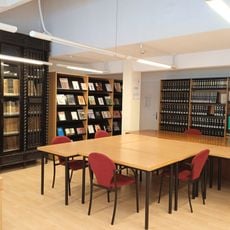
The Archivo del Reino de Galicia occupies a building next to the Jardín de San Carlos, conceived by architect Antonio Tenreiro Rodríguez and inaugurated in 1955; the archive moved there in 1956. It serves as the General Historical Archive of Galicia and the Provincial Historical Archive of A Coruña, holding over 250 fonds, including parchment diplomas from the 9th century.
The archive's origins trace to a 1529 royal decree by Charles I and a 1543 provision by Charles I and Joanna I ordering the safekeeping of Real Audiencia de Galicia records. Charles III formally created the archive on 22 October 1775, with a building planned in Betanzos whose seven vaults each had a key for one Galician province; it was never used for that purpose because the archive was moved to A Coruña. After stays in the Palacio de la Real Audiencia and the Palacio de Justicia basement from 1936, it moved in 1956 to its current building by Antonio Tenreiro, inaugurated in 1955.
The archive holds photographs, maps, and historical postcards that show how Galician society changed over the centuries. These collections let visitors trace the everyday history of the region through visual documents.
The archive welcomes visitors on weekdays, with varying hours depending on the season. It is wise to check ahead which collections are available for your visit and whether advance registration is needed.
The archive keeps parchment diplomas dating back to the 9th century, the oldest written records it holds. Its core, however, comes from the proceedings of the Real Audiencia de Galicia, the court created by the Catholic Monarchs from 1480. Writer Manuel Murguía headed the archive between 1870 and 1875.
The community of curious travelers
AroundUs brings together thousands of curated places, local tips, and hidden gems, enriched daily by 94,418 contributors worldwide.