Arco de Santa María, Medieval gate in Burgos, Spain.
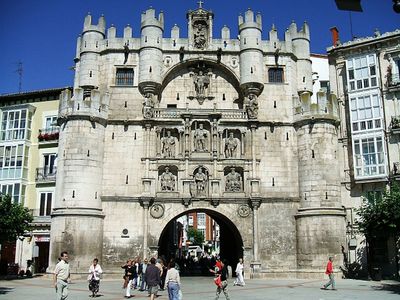
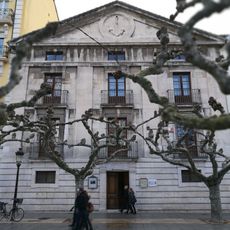
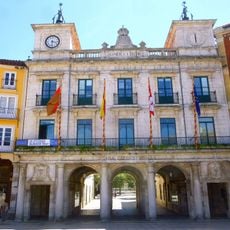
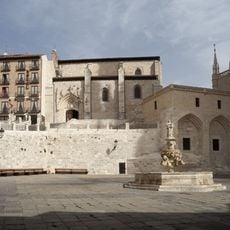
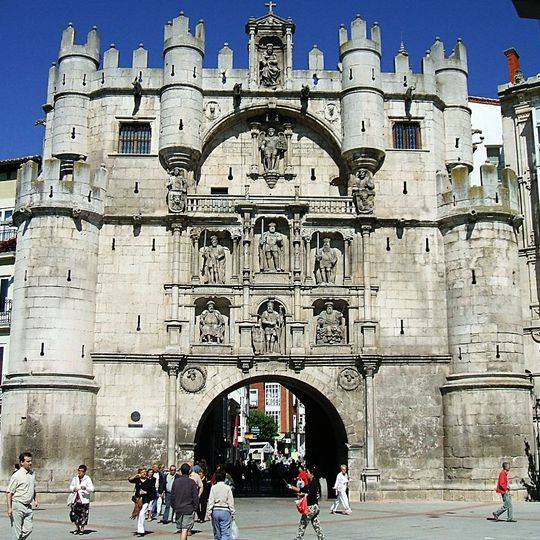
The Arco de Santa María is a 16th-century triumphal arch-gate in Burgos, built in white limestone from Hontoria de la Cantera. Its main facade is arranged like a carved altarpiece in two tiers and three vertical sections, with six niches holding statues of Castilian figures, a balustraded balcony with two mace-bearers and the guardian angel, four gargoyles, and a crenellated top. Two cylindrical towers flank it, and the rear facade, from the 14th century, has a stone gallery under the roof.
The original gate was completely rebuilt in the 16th century under Charles V, following the city's support for the king during the Revolt of the Comuneros. This transformation turned it into a monument celebrating royal favor and political loyalty.
The gate's name comes from the Santa María bridge and the Virgen María, patron of Burgos, whose statue crowns the facade. Inside, the Sala de Poridad, an octagonal room with Mudéjar coffered ceiling, housed the city council until 1780; its walls show 16th-century paintings of Charles V, Philip II, Fernán González, El Cid and the judges Laín Calvo and Nuño Rasura.
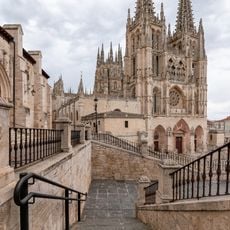
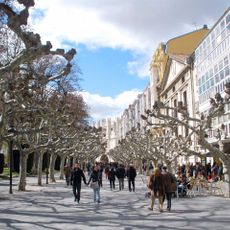
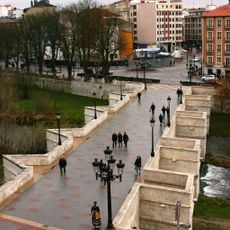
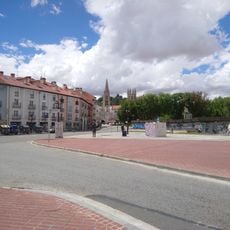
The gate links the Santa María bridge over the Arlanzón with the Plaza del Rey San Fernando, next to the cathedral, so it sits on the main walking route through the old centre. The rear facade, plain and 14th-century, has a stone gallery under the roof; the vaulted passage can be crossed on foot at any hour.
The Sala de Poridad, an octagonal room where the city council met until 1780, keeps a Mudéjar coffered ceiling and 16th-century paintings of Charles V, Philip II, Fernán González, El Cid and the judges Laín Calvo and Nuño Rasura, shown as models of good government.
The community of curious travelers
AroundUs brings together thousands of curated places, local tips, and hidden gems, enriched daily by 94,990 contributors worldwide.