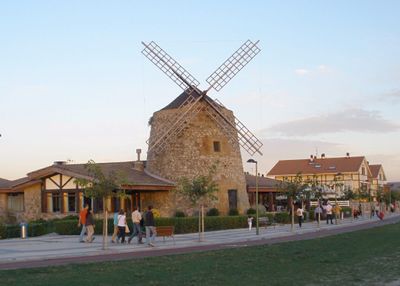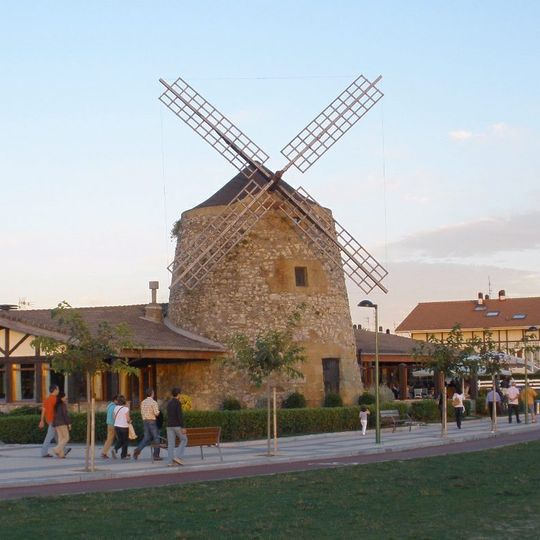
Molino de Aixerrota, Stone windmill in Getxo, Spain.
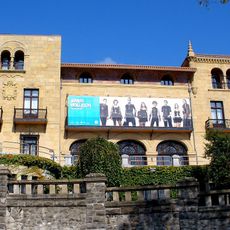
Molino de Aixerrota is a windmill on the cliffs of La Galea in Santa María de Guecho, Getxo. It has the truncated cone shape typical of 18th-century Biscayan windmills, unlike the cylindrical Manchego mills. Since a late-20th-century renovation it houses a painting gallery, with a restaurant in the adjoining building.
The mill was built in 1727 during a long drought in the Señorío de Vizcaya. According to local accounts, an Irishman, Edmundo de Shee (or O'Shea), financed it to grind wheat without water. When the rains returned, water mills resumed work and Aixerrota fell out of use. The writer Pedro Fernández Puig later turned this story into a novel.
The name comes from Basque: haize (wind) and errota (mill). The mill was built in 1727 after a drought in the Señorío de Vizcaya, and the Irishman Edmundo O'Shea (also written de Shee) is credited with the venture. Getxo writer Pedro Fernández Puig turned the story into the novel "Aixerrota, el legado del Irlandés", published in book form in 2014; the local secondary school Aixerrota BHI also carries the mill's name.
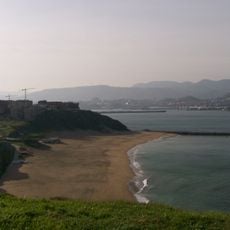
The mill stands on the La Galea cliffs in the Elexalde neighbourhood of Getxo, on the road toward the cape. Since the late-20th-century remodelling it houses a painting gallery, with a restaurant in the adjoining building, so opening depends on those businesses. The cliff-top setting is exposed to wind off the sea.
The mill's name is simply the Basque for windmill: haize (wind) and errota (mill). Local writer Pedro Fernández Puig, under the pen name Paúl Fernández de Areilza, turned its construction into a novel, first in 2012 and published in print in 2014 as Aixerrota, el legado del irlandés.
The community of curious travelers
AroundUs brings together thousands of curated places, local tips, and hidden gems, enriched daily by 93,898 contributors worldwide.