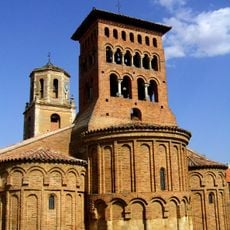
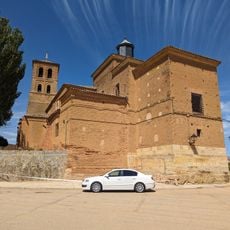
Monasterio de Sahagún, Benedictine monastery ruins in Sahagún, Spain.
Monasterio de Sahagún is a former Benedictine monastery whose Romanesque stone structures still stand in the town center. The ruins display arched passages and thick stone walls that once dominated the riverside landscape.
The monastery was founded in 904 and rose to prominence under King Alfonso VI as a center of Cluniac reform. Its influence shaped medieval Spanish monasticism for centuries.
The monastery's name recalls the martyrs Facundo and Primitivo, whose relics drew pilgrims to Sahagún. Its fueros, granted in 1085, required townspeople to use the monastery's oven and forbade them from selling fish or wine, rules that sparked revolts from 1087 and led to the oven monopoly's suppression in 1095.
The ruins are viewable from the outside and give a clear sense of the medieval complex's layout. The riverside location makes the site easy to reach and walk around on your own.
The monastery's abbot held direct jurisdiction over the territory, which depended on the Holy See rather than on the king. In 1237 the prior Abdalla bought a Moor named Hameth for 50 Alfonsine maravedís, a transaction recorded in the monastery's documents. The clock tower survived the 1837 auction only because it housed the town clock.
The community of curious travelers
AroundUs brings together thousands of curated places, local tips, and hidden gems, enriched daily by 94,256 contributors worldwide.