Parc de Catalunya, Urban park in Sabadell, Spain
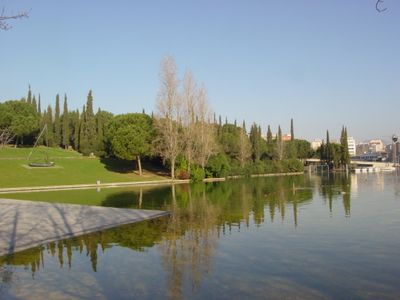
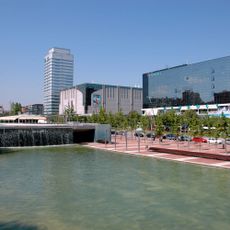
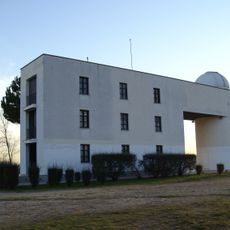
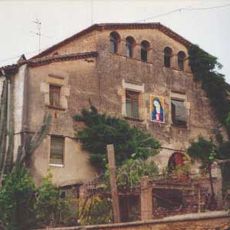
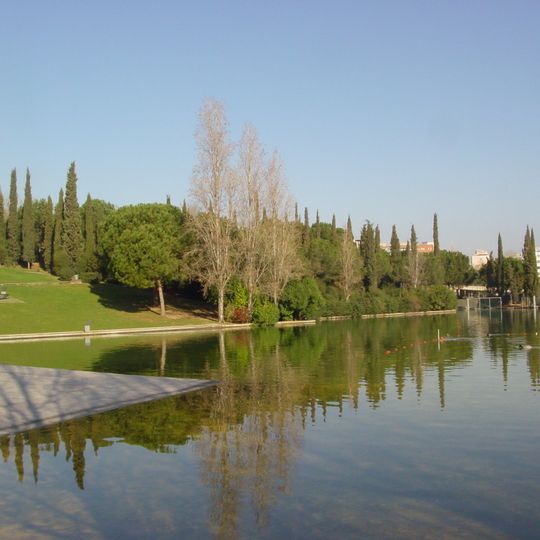
Parc de Catalunya covers 43 hectares from Eix Macià to Can Rull, where the 15th-century masia of Can Rull stands. Its artificial lake covers 8,439 m², holds about six million litres and has a four-metre waterfall. The park also contains an amphitheatre, a miniature railway circuit and an astronomical observatory.
The first park design, by architects Josep Renom and Joaquim Manich, dates from 1929 but was never built. In 1977 a plan for 3,300 homes on the land was approved; 75 citizens' groups appealed and in 1979 tried to plant trees, which the civil governor banned. The democratic council elected that year began buying land, and in 1986 Joan Roig and Enric Batlle presented the layout. Work started in 1989 and the first phase opened in 1992.
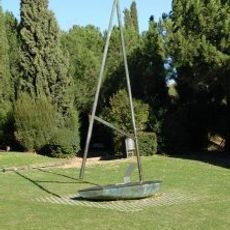
The park's name appears in the lower lake, where fountains rise from the empty spaces of the letters 'Parc de Catalunya'. Three sculptures stand out: Antoni Marquès's 'Arbre de ferro' at the centre, Joan Brossa and Marquès's 'A de barca' on the lawn by the lake, and Agustí Puig's 'L'home de bronze' (2011), dedicated to former mayor Antoni Farrés.
Visitors can enjoy boat rentals at the dock, ride a miniature train through the park, or use the skating rink during winter months. The layout allows you to move between these activities easily and choose how to spend your time based on your interests.
At the highest point of the park sits an astronomical observatory housing one of Europe's largest private telescopes, operated by the Sabadell Astronomical Group. This facility offers visitors a chance to observe the night sky from an unexpected location within the city.
The community of curious travelers
AroundUs brings together thousands of curated places, local tips, and hidden gems, enriched daily by 94,461 contributors worldwide.