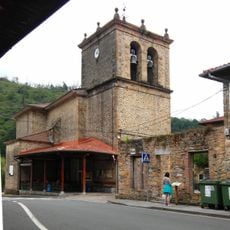
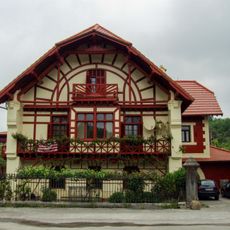
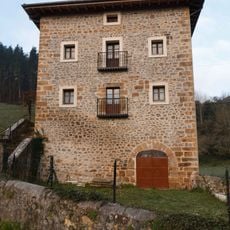
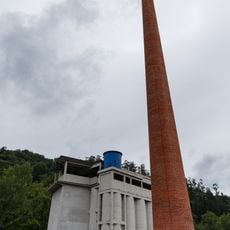
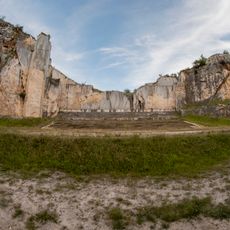
Armañón Natural Park, Nature reserve in Guriezo, Spain.
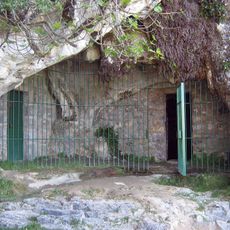
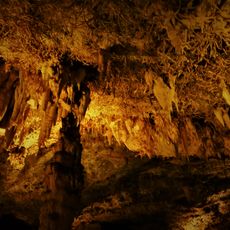
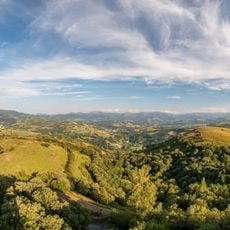
Armañón Natural Park covers 3,519 hectares in the Las Encartaciones region of Biscay, within the municipalities of Carranza and Trucíos. The limestone massifs of Ranero, Armañón and Los Jorrios dominate a terrain of Early Cretaceous rock, with sandstone and lutite in the centre. The Pozalagua cave, a single 125-metre-long hall, lies beneath the Ranero cliffs.
The protected area developed from growing interest in the geological formations after a major cave was discovered in the 1950s during mining work. Mining operations in the region were later halted to preserve the natural site.
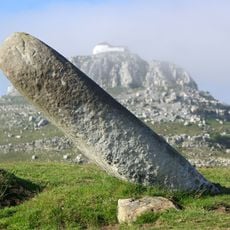
In 2021, 14 megalithic monuments on the Armiñón-Galupa-Surbias ridge were made accessible: six dolmens, six burial mounds, a cist and a hut. Javier Gorrochategui and María José Yarritu located most of them between 1959 and 1975. In 2009 they were declared a Monumental Complex, and the Galupa I dolmen yielded a polished ophite axe, three flint blades and jet beads.
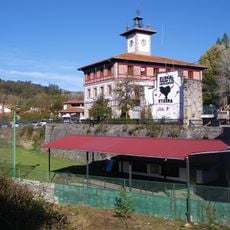
The visitor center provides information about hiking trails and the best times to explore different areas. Access points are located in the villages of Carranza and Trucios, so it helps to decide which entrance suits your route before arriving.
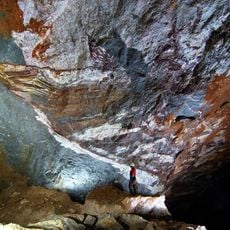
The Torca del Carlista, a few metres from Pozalagua cave, is one of the largest underground chambers in the world, and the park shelters the main breeding colony in the Basque Country of the Mediterranean horseshoe bat, a species at risk with a very small population.
The community of curious travelers
AroundUs brings together thousands of curated places, local tips, and hidden gems, enriched daily by 93,911 contributors worldwide.