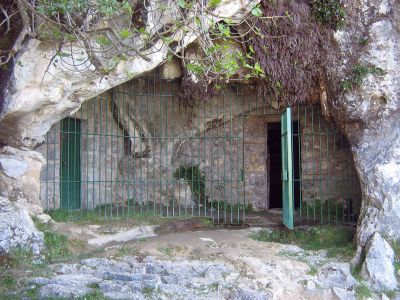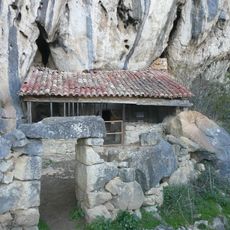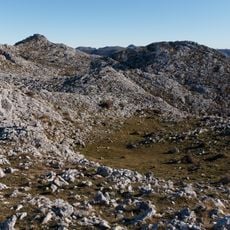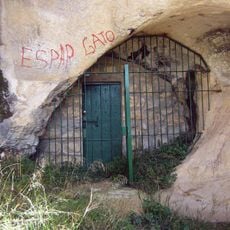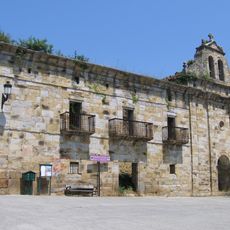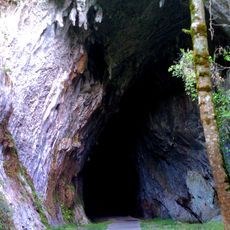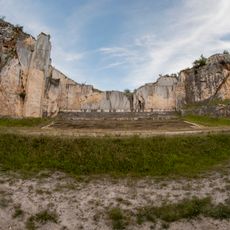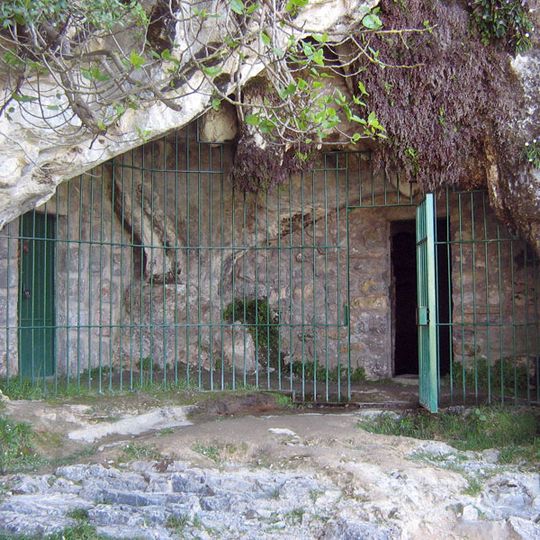
Cueva de Covalanas, Prehistoric cave art site in Ramales de la Victoria, Spain.
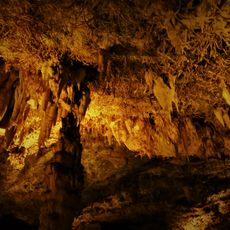
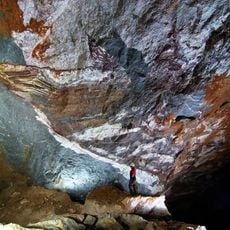
Cueva de Covalanas is a prehistoric cave containing Paleolithic paintings located near Ramales de la Victoria. The cave has multiple galleries decorated with hand-painted animal figures left by early people roughly 22,000 years ago.
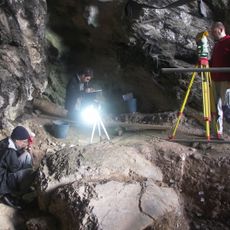
The cave was discovered in 1903 by L. Sierra and Hermilio Alcalde del Río, marking the start of scientific study of these paintings. This discovery helped researchers understand the artistic abilities and daily life of people from that time period.
The cave displays depictions of red deer, a stag, a horse, and an auroch, all painted with a distinctive dotting technique. These hunting scenes reflect the connection early people had with the animals around them.
A 400-meter walkway inside the cave allows visitors with reduced mobility to access the space while protecting the archaeological remains. The paths are well maintained, but sturdy footwear is recommended since the ground can be uneven.
The right gallery contains a sequence of small dots located 65 meters from the entrance, followed by numerous animal representations. This sequence may represent an early use of abstract symbols by people from this time period.
The community of curious travelers
AroundUs brings together thousands of curated places, local tips, and hidden gems, enriched daily by 91,541 contributors worldwide.