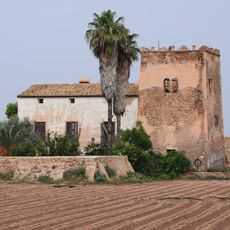
Sima de las Palomas, Karst shaft cave and archaeological site in Torre-Pacheco, Spain
Sima de las Palomas is a natural cave formed as a vertical shaft that descends about 18 meters into the ground. Located on a hillside about 123 meters above Mediterranean sea level, it holds many prehistoric remains from human occupation.
Miners in the 19th century dug a horizontal tunnel into the shaft and removed much of its brecciated fill, leaving rubble on the hillside. In 1991, speleologist Juan Carlos Blanco Gago found a Neanderthal jaw while descending the shaft. Excavations began in 1994 and continue under Michael Walker of the University of Murcia, revealing remains dated between 130,000 and 40,000 years ago.
The name comes from the rock doves that nested in the shaft when researchers began work. The site lies in Torre-Pacheco, between Balsicas, San Cayetano and Dolores de Pacheco, and forms part of the protected Cabezo Gordo landscape, a hill 312 m high surrounded by farmland. The child buried with two panther ankle bones suggests a ritual.
The shaft lies under overhanging rock on Cabezo Gordo, reached through an artificial horizontal tunnel dug by miners, whose drill marks for dynamite are still visible. The 18-metre shaft is a vertical drop, so entry requires rope and abseiling equipment. Excavation runs about three weeks a year, except the 2020-2021 pandemic pause, so access is tied to the research campaign.
Among the remains are the bones of a young Neanderthal woman found together with a child, suggesting early burial practices. This discovery in southeastern Iberia offers rare insight into the social behavior of these ancient people.
The community of curious travelers
AroundUs brings together thousands of curated places, local tips, and hidden gems, enriched daily by 93,672 contributors worldwide.