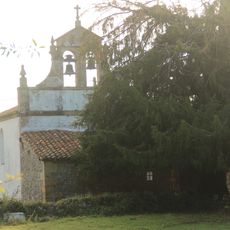
Iglesia de Santa María de la Oliva, Medieval church in Villaviciosa, Spain.
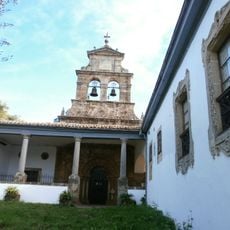
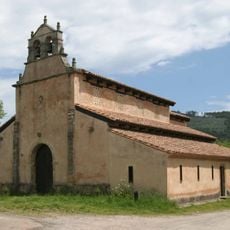
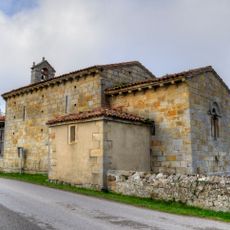
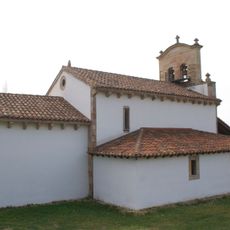
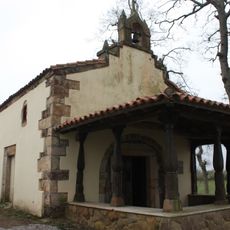
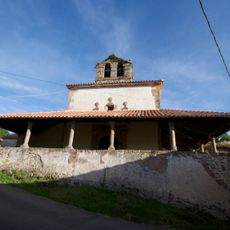
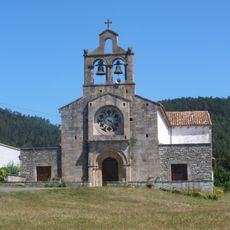
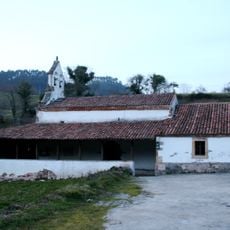
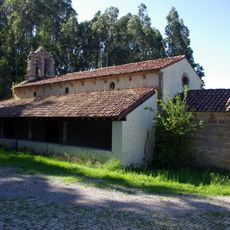
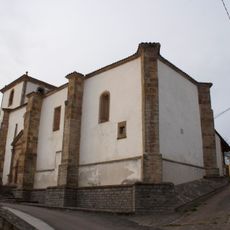
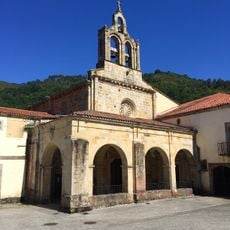
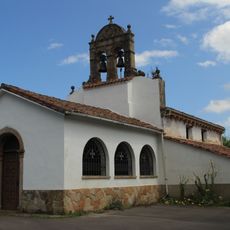
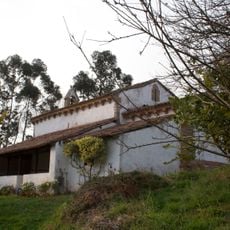
Iglesia de Santa María de la Oliva is a medieval stone church in Villaviciosa featuring a single nave with a rectangular floor plan. It includes a chancel, a sacristy, and an open portico on its south wall.
The church's history begins with the carta puebla granted by Alfonso X the Wise on 17 October 1270, which spurred the town's growth and led to the church's construction. Its date is debated, as locals still paid tithes at Amandi. The chancel was rebuilt in the late 15th century; a sacristy was added in 1658 by Ignacio Cagijal, and the Soledad chapel in the 17th century. It lost parish status in 1838, was declared a monument in 1931, burned in 1936, and was restored by Luis Menéndez Pidal in the mid-20th century.
The interior displays capitals carved with animal and human faces, along with arches decorated with geometric patterns such as four-petaled designs and zigzag ornaments in various locations.
The church stands apart from the town's street grid, separated from it when its surroundings were reorganised between 1873 and 1885. The main doorway faces west, with two smaller side doorways; a portico shelters the south wall, while the north portico was lost over time. The square-ended chancel and pointed vaults are braced by buttresses visible from outside.
The west doorway displays four pointed arches supported by decorated columns, creating an elaborate entrance feature. The chancel is divided into two distinct sections by an ornate pointed arch.
The community of curious travelers
AroundUs brings together thousands of curated places, local tips, and hidden gems, enriched daily by 94,941 contributors worldwide.