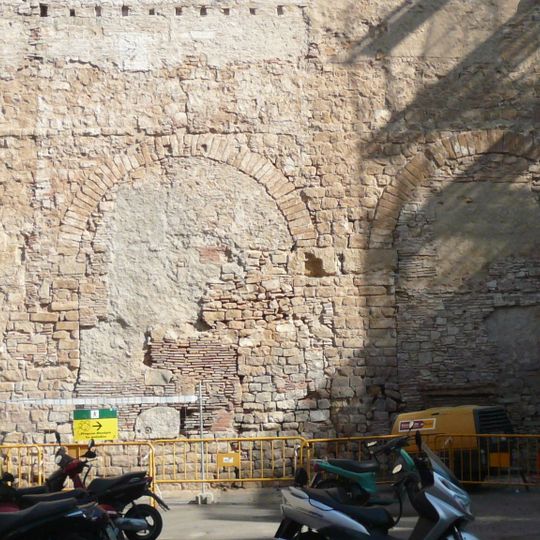
Barcino aqueduct, Roman aqueduct in the Gothic Quarter, Barcelona, Spain
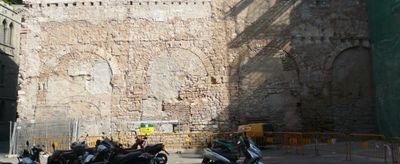
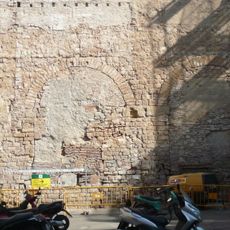
The Barcino aqueduct was a Roman conduit that brought water from the Montcada area near the Besòs to the colony of Barcino. At Plaça 8 de Març four arches and their pillars survive intact, still carrying the specus channel through which the water ran. A pillar base was also excavated at number 25 Carrer de les Magdalenes, and a 90-metre opus signinum channel was found at Carrer Coronel Monasterio 6-16.
Built in the 1st century alongside the founding of the Roman colony of Barcino, the aqueduct drew water from springs near the Besòs at Montcada. It supplied the city into the 4th century, when new elite houses with baths and the episcopal complex still received a regular flow. It ceased to function around the 9th–10th centuries, when the Rec Comtal canal replaced it.
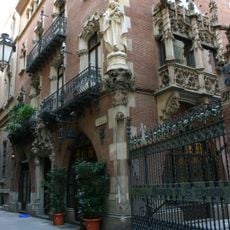
The aqueduct fragments sit within the Gothic Quarter's medieval buildings, showing how the city's architecture changed across different eras. You can see how Romans and later people used and adapted the same spaces.
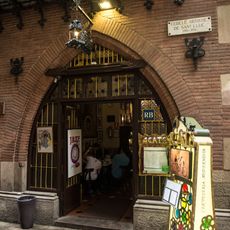
The remains are accessible during the day at two nearby locations: you can view them from outside at Casa del Arcediano's entrance or inside the hotel lobby. Plan for just a few minutes to see them, as the visible portions are relatively small.
Archaeologists uncovered five original pillars at the city edge during 1957 excavations, which allowed them to later reconstruct two arches. This reconstruction shows visitors how the structure once appeared.
The community of curious travelers
AroundUs brings together thousands of curated places, local tips, and hidden gems, enriched daily by 94,303 contributors worldwide.