Aqueduct of Noáin, 18th century aqueduct in Noáin, Spain.
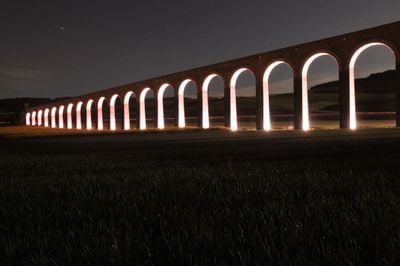
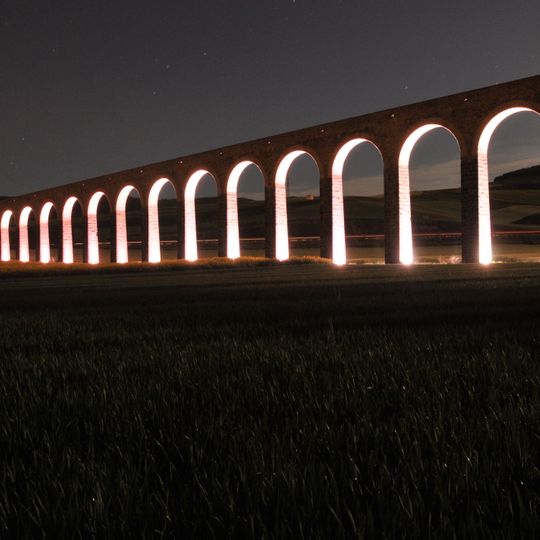
The Aqueduct of Noáin is a stone structure that crosses a valley with a series of arches supported by tall columns. The construction stretches across the landscape with a rhythm of regular, repeating stone openings that creates a distinctive visual pattern.
The structure was built in the late 18th century as an engineering project to move water from one location to another. It was designed and completed over several years during that era.
The structure forms part of the French Way in Aragon and holds recognition as a Bienes de Interés Cultural under the Spanish heritage register.
The aqueduct can be visited throughout the year and viewed from multiple vantage points around the valley. Different angles provide various perspectives of how the structure spans the landscape.
Most of the original stone arches have survived centuries of exposure to weather and time. This preservation shows how well 18th-century builders understood the materials and methods needed for structures meant to last.
The community of curious travelers
AroundUs brings together thousands of curated places, local tips, and hidden gems, enriched daily by 60,000 contributors worldwide.