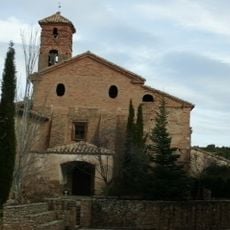
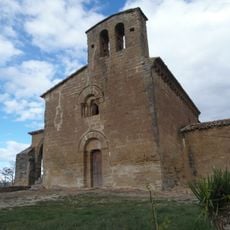
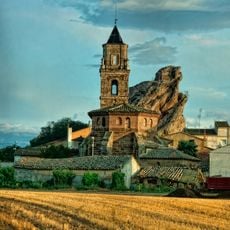
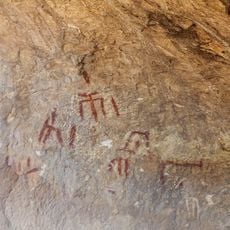
Monasterio de Nuestra Señora de la Gloria, Cistercian monastery in Casbas de Huesca, Hoya de Huesca, Spain
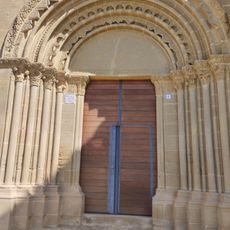
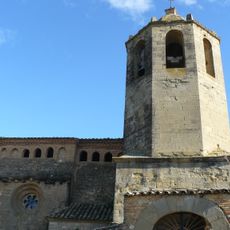
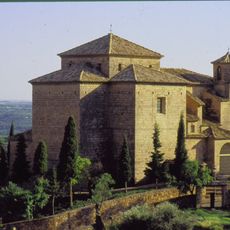
The Monasterio de Nuestra Señora de la Gloria is a Cistercian convent founded in 1173 in Casbas de Huesca. Its late-Romanesque church, consecrated in 1208, has a Latin-cross plan, a barrel-vaulted nave, three semicircular apses and an octagonal cupola over the crossing. The south portal (c. 1200) shows a Chrismon tympanum with eleven archivolts, and the 14th–15th-century cloister has ogee arches.
The monastery was founded in 1173 by Countess Oria of Pallars with support from her husband Arnau Mir and Bishop Esteve of Sant Martí. It remained an active religious center for over 800 years, experiencing only two brief closures during the 1868 revolution and 1936 war.
The monastery was founded in 1173 by Countess Oria de Pallars, and its first abbess, Isabel, governed 30 noblewomen until 1182. Abbess Ana Francisca Abarca de Bolea (1672-1676) wrote the pastoral drama Vigilia y octava de San Juan in Aragonese. The abbess held civil and criminal jurisdiction over the monastery's lands from 1178.
The monastery stands in Casbas de Huesca, in the Hoya de Huesca region of Aragon. The south portal with its Chrismon tympanum and eleven archivolts is the starting point; the cloister, chapter house and the 10,000 square metres of built space lie beyond. The complex passed into private hands in 2004, so check access to the interior before travelling.
The chapter house keeps two 14th-century alabaster tomb slabs of abbesses set into the floor, not monks. The monastery was a Cistercian nunnery from 1173, and its abbesses held civil and criminal jurisdiction over the dependent villages from 1178.
The community of curious travelers
AroundUs brings together thousands of curated places, local tips, and hidden gems, enriched daily by 95,358 contributors worldwide.