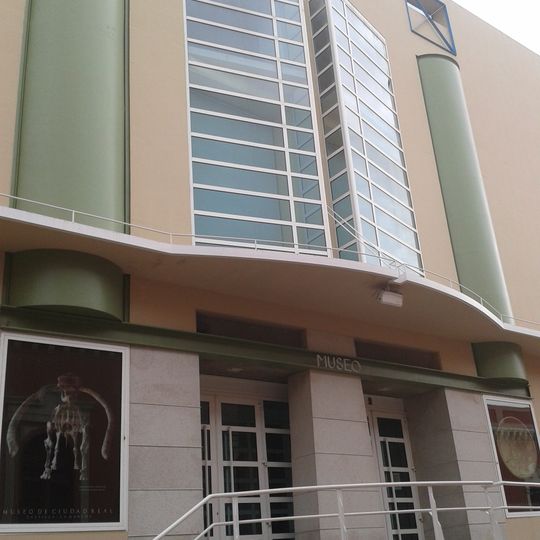
Museo de Ciudad Real, Regional museum in Ciudad Real, Spain
The Museo de Ciudad Real is a regional museum housed in two buildings, containing collections related to natural history and art. The exhibition is organized across different thematic sections with fossils, archaeological finds, and paintings from various periods.
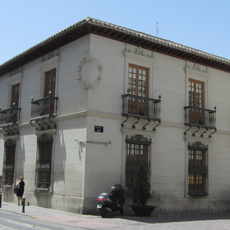
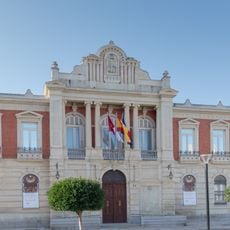
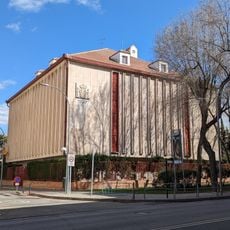
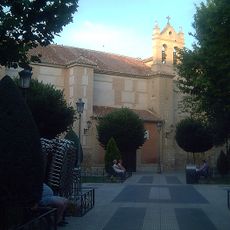
Created by royal decree on 23 January 1976, the museum opened in a building by architect Carlos Luca de Tena on 15 March 1982. Reforms by Javier Navarro Gallego led to its reopening on 29 March 1995. The Fine Arts section moved to the 17th-century Convent of La Merced, and the main building reopened on 27 September 2013 after renovation.
The museum displays artifacts from different periods of the region, ranging from early human settlements to medieval times, including Iberian pottery and Roman coins. These objects tell the story of peoples who inhabited this area across thousands of years.
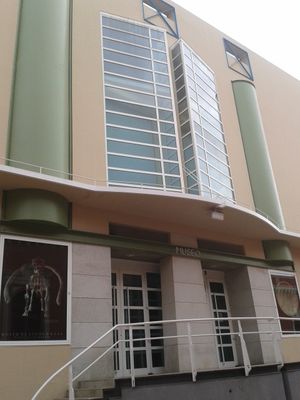
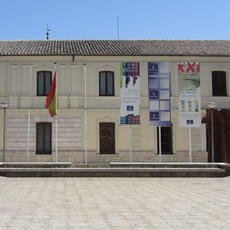
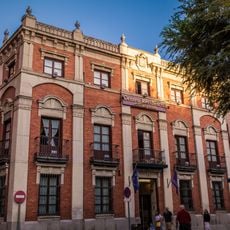
The paleontology and archaeology collections are in the main building on Calle Prado; the fine arts section is in the 17th-century Convent of La Merced, a separate building. The main building was closed for electrical and climate-control work from 2008 until its reopening on 27 September 2013, so check which sections are open before travelling. The facade carries the word MUSEO above two sets of white-framed glass doors.
The museum's landmark piece is a reconstructed skeleton of the gomphothere mastodon Anancus arvernensis from Las Higueruelas in Alcolea de Calatrava. The same site yielded Stephanorhinus etruscus, the oldest known rhinoceros of its kind in Europe. A large dark poster of a skeleton hangs beside the entrance doors.
The community of curious travelers
AroundUs brings together thousands of curated places, local tips, and hidden gems, enriched daily by 94,464 contributors worldwide.