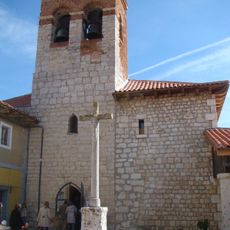
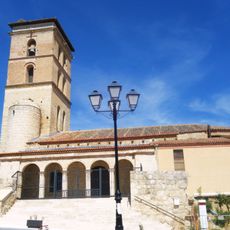
Church of Saint Mary, Wamba, Medieval church in Wamba, Spain
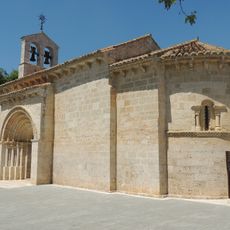
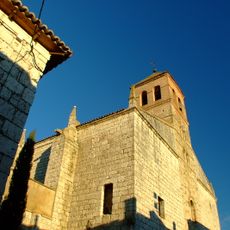
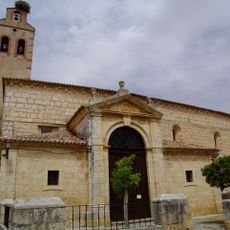
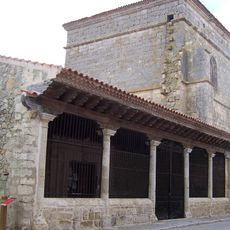
The Church of Saint Mary in Wamba has a 10th-century Mozarabic crossing and three square apses, with a 12th-century Romanesque nave added to the west. The basilical plan has three aisles, the central one wider and taller, separated by pilasters with attached columns. The Chapel of Doña Urraca and the Ossuary, decorated with human skulls and bones, open off the eastern end.
The church was founded during the Reconquista period on the remains of an earlier Visigothic building from King Recceswinth's time. Over the following centuries, the building expanded and adapted to serve the spiritual needs of local people.
The chapel of Doña Urraca takes its name from Queen Urraca of Portugal, who became a nun after her marriage was annulled and was buried here. The neighbouring ossuary is decorated with human skulls and bones, a display tied to the burial practices of the former monastery.
The church welcomes visitors and continues to hold regular religious services, which guests can often watch respectfully. Coming early in the day or avoiding service times helps ensure you can explore freely and respectfully.
The church keeps a Mozarabic crossing and chevet from the 10th century, while the western hall is a late-Romanesque addition of the 13th century. The two building phases meet inside the same nave, so a visitor can read a 300-year gap in a few steps.
The community of curious travelers
AroundUs brings together thousands of curated places, local tips, and hidden gems, enriched daily by 94,863 contributors worldwide.