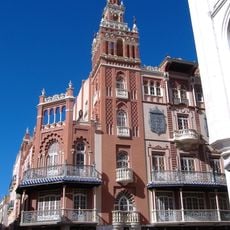
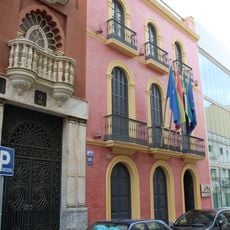
Monasterio de Santa Ana, Badajoz, Poor Clares monastery in the historic centre, Badajoz, Spain
Monasterio de Santa Ana is a Franciscan monastery in Badajoz's historic center with two main facades and a stone coat of arms carved in 1771. The complex includes a cloister and religious spaces decorated with historical artworks and architectural features.
Leonor Lasso de la Vega y Figueroa founded the monastery in 1518 under a bull of Pope Leo X, and the Poor Clares took it over; she was abbess for forty years until her death on 17 April 1558. It belonged to the Franciscan province of San Miguel until 1856, and in 1970 the community returned to the Rule of Saint Clare of 1253. Queen Anne of Austria died here on 26 October 1580 and was first buried in the monastery before her transfer to El Escorial.
The church contains a gilded wooden altarpiece decorated with spiral columns and saint figures that reflect the artistic skill of past craftspeople. Visitors can see this ornate decoration today and understand how the monastery served as a spiritual center for the community.
The monastery entrance is at Calle Duque de San Germán 13C, adapted in 1972 for the community's laundry and bookbinding services. The original stone doorway with the Franciscan coat of arms is preserved on the same street. The church entrance on Calle Santa Ana has a Portuguese marble doorway with a statue of Saint Anne and royal coats of arms added on 28 October 1771.
The monastery's most venerated image, the Virgen de las Virtudes y Buen Suceso, arrived in 1619. It was found in a wall cavity of Madrid's Jerónimos church during reconstruction work, together with two other images; one stayed in Madrid and another went to the Franciscans of Trujillo. Its dark face resembles the Black Virgins of Montserrat and Guadalupe.
The community of curious travelers
AroundUs brings together thousands of curated places, local tips, and hidden gems, enriched daily by 95,333 contributors worldwide.