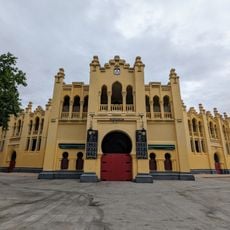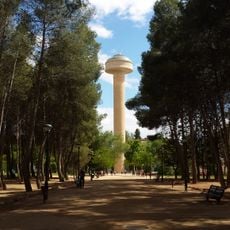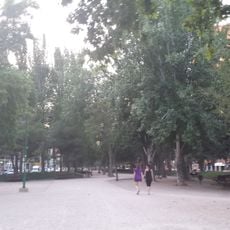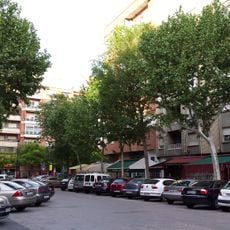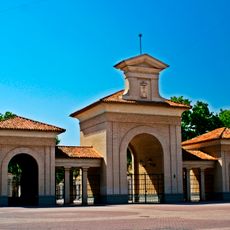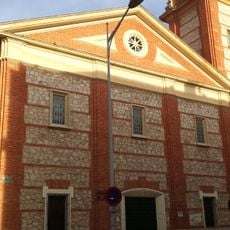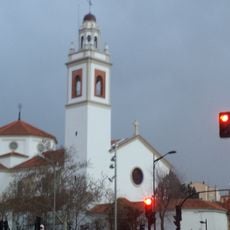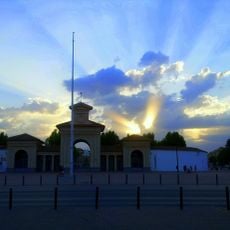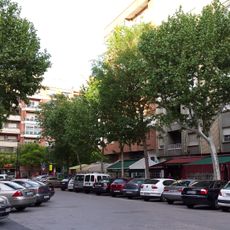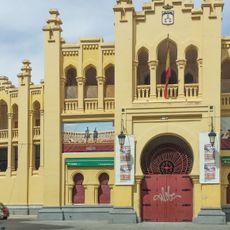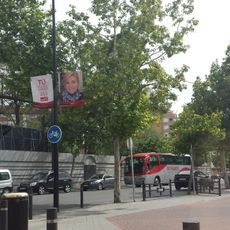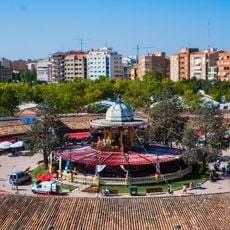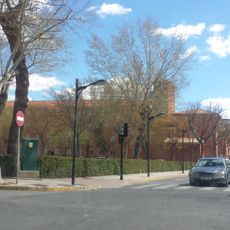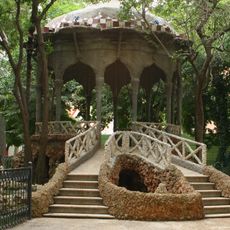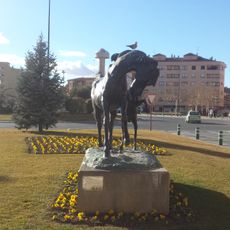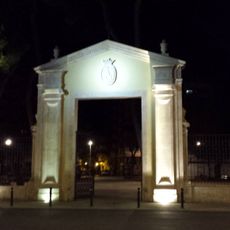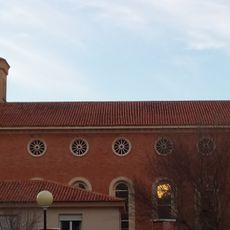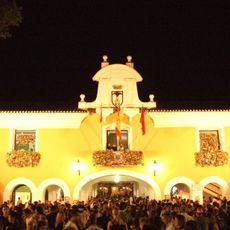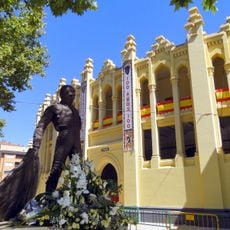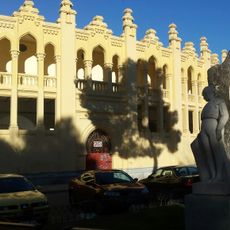
Fair of Albacete, Heritage fair ground in Albacete, Spain.
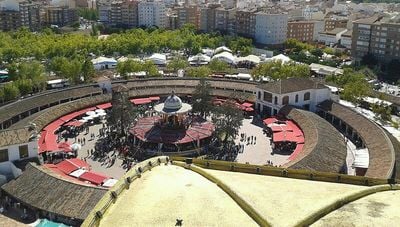
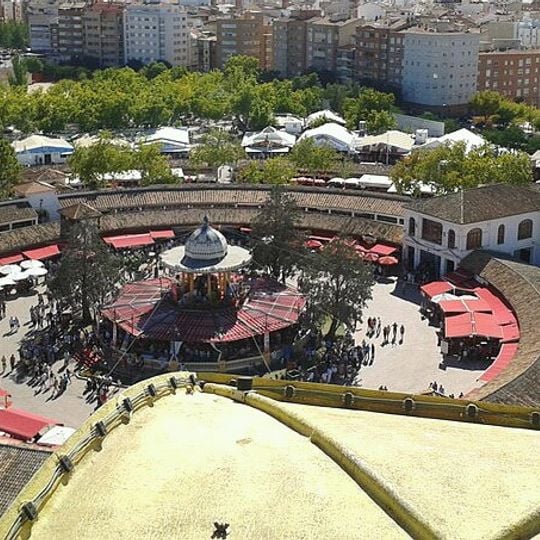
The Fair of Albacete is a circular fairground in the city of Albacete, in southeastern Spain, built around a series of concentric rings that house commercial stands. The structure is divided into different zones connected by curved walkways, where regional products, local crafts, and the traditional knives of the area are sold.
King Felipe V granted the city a royal privilege in 1710 that officially recognized the fair and gave Albacete a fixed role as a trading center in the region. The permanent structure that stands today was inaugurated in 1783, replacing earlier temporary setups.
The fair is closely tied to the veneration of the Virgen de Los Llanos, the patron of Albacete, whose feast draws processions and floral offerings each September. Visitors can watch these devotional gatherings unfold around the grounds, where commerce and local faith share the same space.
The fairground is most active during the September fair, when the stands open and the full layout of the rings can be experienced as it was intended. Outside of that period, the site can still be visited to take in the architecture and the overall circular design.
The structure is known locally as 'la Sartén', meaning 'the Pan', because its shape from above resembles a flat cooking pan. This made it one of the earliest purpose-built circular fairgrounds in Europe, a model that was rarely replicated elsewhere.
The community of curious travelers
AroundUs brings together thousands of curated places, local tips, and hidden gems, enriched daily by 60,000 contributors worldwide.