Dolmen of Guadalperal, Dolmen in Peraleda de la Mata, Spain
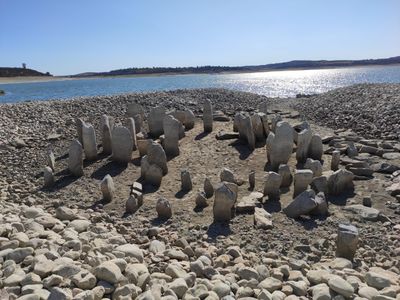
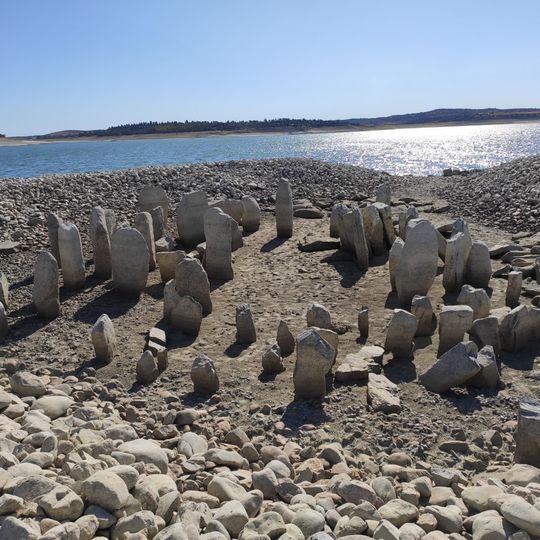
The Dolmen of Guadalperal is a Stone Age burial site in the Valdecañas reservoir near Peraleda de la Mata in Cáceres province. The structure consists of a circle of large granite stones forming an egg-shaped chamber, with a long passage that once served as an entrance for burial rituals.
A German archaeologist uncovered the site in the nineteen twenties and conducted excavations before the area was flooded. In the nineteen sixties, the monument disappeared underwater when a reservoir was built to generate electricity and irrigate fields.
The monument's name links it to the nearby village of Guadalperal. Only the two-metre menhir at the chamber entrance carries carvings: an elongated wavy line read by some as a snake, and several cup marks. A local amateur has proposed the wavy line maps the meanders of the Tagus, though no scientific argument supports this.
Visiting depends heavily on the water level in the reservoir, which drops during dry years and exposes the stones. Those hoping to see the site should check current conditions beforehand, as it remains underwater most of the time.
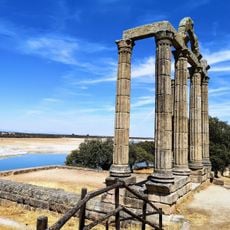
The stones became so visible during the last major drought that activists called for moving the monument to a dry location. Romans also used the area later, as coins and grinding stones found among Stone Age tools show.
The community of curious travelers
AroundUs brings together thousands of curated places, local tips, and hidden gems, enriched daily by 95,293 contributors worldwide.