Inscription from Lerga, Roman funerary stele in Museum of Navarre, Spain.
The Inscription from Lerga is a rectangular sandstone funerary stele, 125 cm high and about 68 cm wide, bearing 46 Latin letters in four lines and a low relief on its front face. The relief shows a horseman above two figures holding a rectangular object between columns. It is kept in the Museum of Navarre.
The stele was carved in the 2nd or 3rd century CE and was found in December 1960 built into the walls of the old Santa Bárbara chapel in Lerga, where it had stood for many years. It is now kept in the Museum of Navarre. The inscription names the deceased, aged 25, and his cousin, with the names Ummesahar and Narhunges, son of Abisunhar, considered Basque-Aquitanian.
The personal names on the stele are read as Vasco-Aquitanian: Ummesahar, which can be explained from Basque "ume zahar", 'eldest child', and Narhunges, son of Abisunhar. Both contain an aspirated H that appears in neither Iberian nor Celtiberian texts, a trait long widespread in Basque speech. Historians debate whether Sahar is a separate name or a genitive.
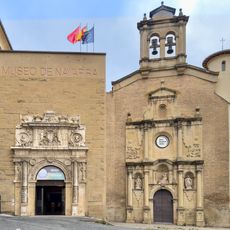
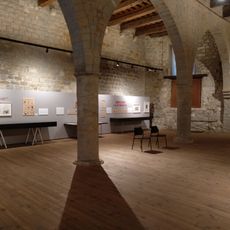
The stele is kept at the Museum of Navarre in Pamplona, where it is displayed among the museum's Roman-era pieces. The stone is a single slab 125 cm tall and about 68 cm wide, decorated only on its front face, so the reliefs and the four lines of text are best examined from the front.
The name Umme Sahar carved on the stone is one of the earliest known Basque personal names on record and reveals how people were called in ancient times. This detail makes the stele exceptionally valuable for language scholars studying ancient naming practices in the region.
The community of curious travelers
AroundUs brings together thousands of curated places, local tips, and hidden gems, enriched daily by 95,293 contributors worldwide.