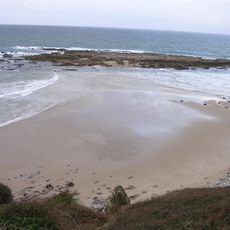
Rábago-El Soplao fossil site, Amber deposit site in Rábago, Cantabria, Spain
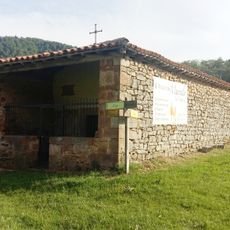
Rábago-El Soplao is a fossil site on the road to El Soplao Cave, about three kilometres from it, in Rábago (Herrerías, Cantabria). Its main outcrop, some 75 m wide and only 1.5–2 m high, exposes dark, carbonaceous, pyrite-bearing lutites of the Las Peñosas Formation, laid down around 112–110 million years ago in a restricted tidal channel of an estuary. The amber-bearing beds also hold plant remains and shells of marine gastropods and bivalves.
The site lies in the Las Peñosas Formation, dated to the early Albian, about 112 to 110 million years ago. In 2008 three researchers, María Najarro, Enrique Peñalver and Idoia Rosales, reported its identification. Its amber yielded new insect species such as Tethysthrips hispanicus, Cantabroraphidia marcanoi and Hallucinochrysa diogenesi.
The site is named after the road to El Soplao Cave, about three kilometres away. Three researchers, María Najarro, Enrique Peñalver and Idoia Rosales, identified it, and its amber yielded new insect species such as Cantabroraphidia marcanoi and Hallucinochrysa diogenesi. Visitors pass the outcrop on the cave access road.
Access to the site is restricted and requires permission from Cantabria's Cultural Department. It lies about 3 kilometers from El Soplao Cave, so a visit can be combined with other nearby attractions.
Some amber pieces carry internal moulds of brackish-water mollusc shells and oysters filled with marcasite, and large lumps were colonised by serpulid worm tubes and bryozoan colonies. This shows they lay in seawater before burial, so the deposit formed in a mixed coastal setting rather than a purely terrestrial forest.
The community of curious travelers
AroundUs brings together thousands of curated places, local tips, and hidden gems, enriched daily by 95,351 contributors worldwide.