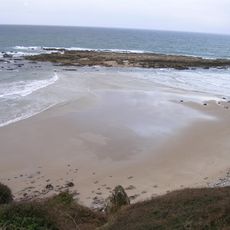
Cave of Chufín, Prehistoric cave entrance in Riclones, Cantabria, Spain
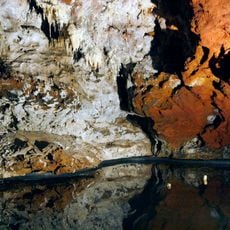
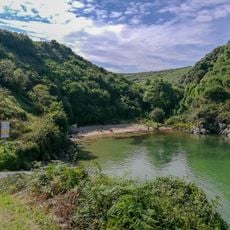
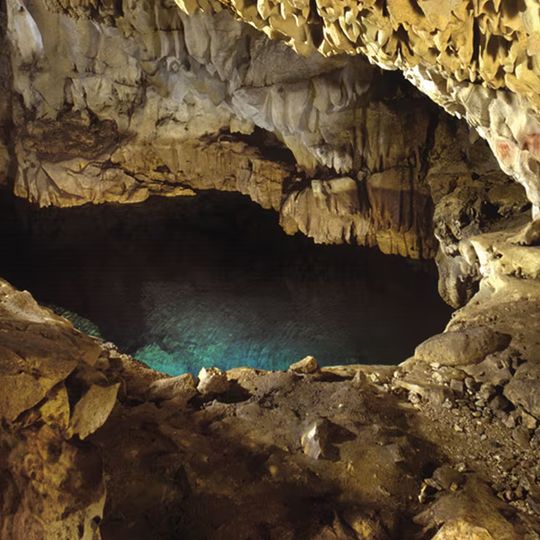
Cave of Chufín is a prehistoric cave entrance in Riclones with a vestibule containing numerous animal engravings, followed by a passage leading to a large grotto. The underground space extends to an artificial water body formed by a reservoir dam.
The cave was discovered in the 1940s during construction of the La Palombera reservoir dam and contains artwork dating back roughly 17,420 years. These early human traces show the region was inhabited and used as an artistic space in prehistoric times.
The entrance area shows ancient engravings of deer, bison, and possibly fish figures created through abrasion techniques on the rock surface.
A visit requires a roughly 2-kilometer walk from the visitor center at the Riclones soccer field. Tours are limited to small groups of up to six people to protect the fragile site.
The engravings were made using simple abrasion techniques scratched directly into the rock and remain clearly visible despite their age. This hands-on method reveals early human artistic skills and the tools used in prehistoric times.
The community of curious travelers
AroundUs brings together thousands of curated places, local tips, and hidden gems, enriched daily by 60,000 contributors worldwide.