Sala hipòstila des Galliner de Madona, Prehistoric archaeological site in Es Migjorn Gran, Spain.
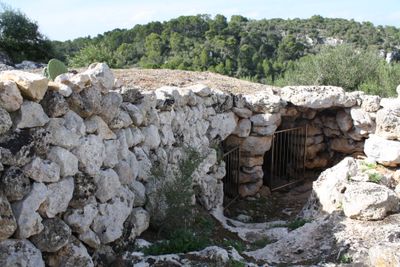
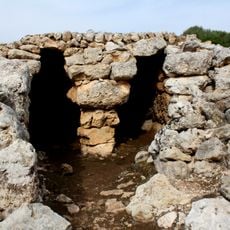
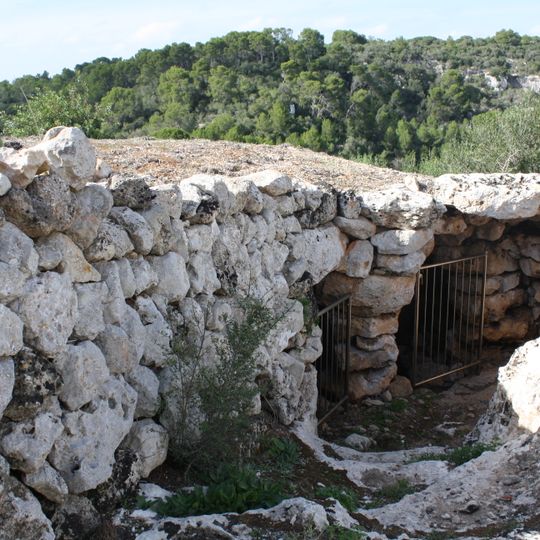
Sala hipòstila des Galliner de Madona is a prehistoric site with five columns and nine pillars made from stacked large stones, supporting massive stone slabs as a roof. The structure uses a system of load-bearing stone elements typical of ancient construction in this region.
The building has never been archaeologically excavated, so its function and chronology remain unknown. It may date to the post-talayotic period (about 550–123 BC), but this is not confirmed. In 1966 it was listed as a protected monument, and in 2023 it became part of the UNESCO World Heritage site "Talayotic Menorca."
The name Galliner de Madona means "the lady of the house's henhouse", because the hall was long used as a stable or chicken coop. The term sala hipòstila is a modern architectural label, not an ancient one. Francisco Camps Mercadal recorded in 1897 that farmers had opened a new entrance through a collapse in the roof.
Access to the site is limited and requires contacting the Heritage Service of Menorca's island council beforehand. The restriction protects the ancient structure and its delicate stone construction.
The opening used today is not the original door: farmers made it through a collapse of the roof, as Francisco Camps Mercadal recorded in 1897. The true entrance, under a single stone lintel, sits left of the facade's centre and remains blocked.
The community of curious travelers
AroundUs brings together thousands of curated places, local tips, and hidden gems, enriched daily by 94,695 contributors worldwide.