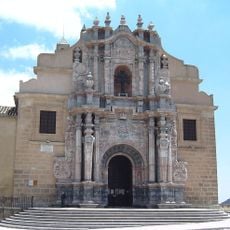
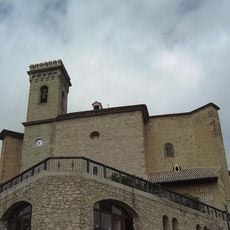
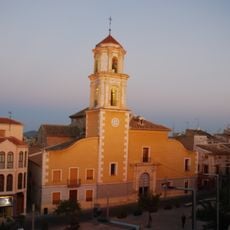
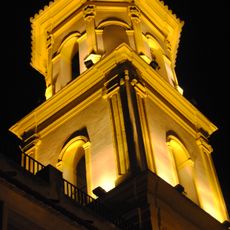
Iglesia del Salvador, Renaissance church in Caravaca de la Cruz, Spain.
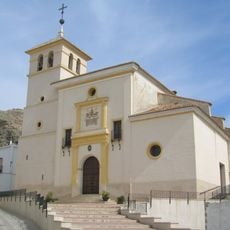
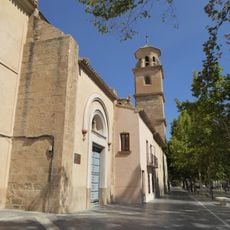
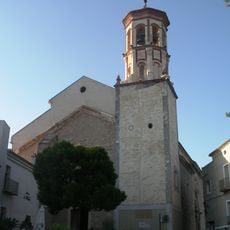
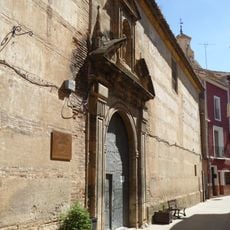
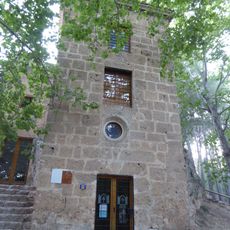
The Iglesia del Salvador in Caravaca de la Cruz began construction in 1526. Its lateral portal, now the main entrance, is a Renaissance triumphal arch with Ionic pilasters and half-columns, a central niche holding a Baroque image of El Salvador, and metopes carved with the crosses of Caravaca and Santiago. The interior was unfinished, and the church has three naves.
The first El Salvador church, built in Gothic style, stood within the medieval walls and was already finished in 1344, when Caravaca passed to the Order of Santiago; it was enlarged between 1498 and 1507. After the War of Granada ended the frontier danger, population growth led the Order's visitors in 1526 to propose a new church outside the walls, with three naves. The Blessed Sacrament was moved there on 27 December 1573, though work on the interior resumed ten years later.
The high altar is a Baroque work brought here in 1876 from the former Jesuit church of Caravaca, which had served as a chapel of the parish after the Jesuits were expelled by Charles III in 1767. The church's side portal, now the main entrance, shows the Cross of Caravaca and the Cross of Santiago in its metopes.
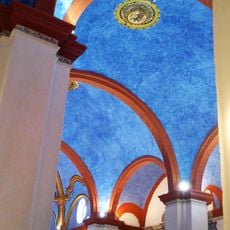
The church is open for worship services and visitors at regular times, so it is best to check current hours before your visit. The interior space is modest in size, allowing you to observe all the details without feeling rushed.
The central niche on the facade holds a Baroque representation of El Salvador carved by Juan Garzón Soriano and completed in 1657. This sculpture reveals how the church blends Renaissance structure with Baroque artistic detail in a way visitors often overlook.
The community of curious travelers
AroundUs brings together thousands of curated places, local tips, and hidden gems, enriched daily by 94,840 contributors worldwide.