Palacio de Mora, Manor house on Calle Ancha, Cádiz, Spain
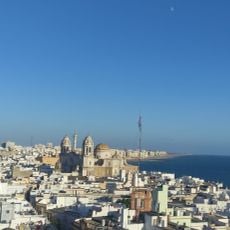
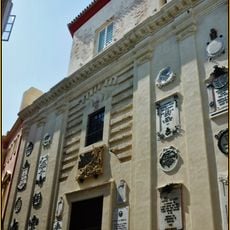
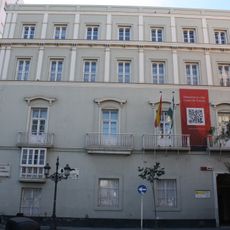
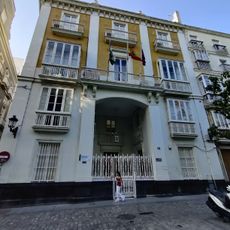
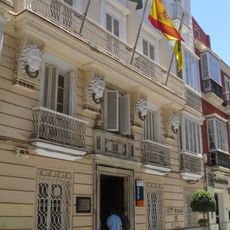
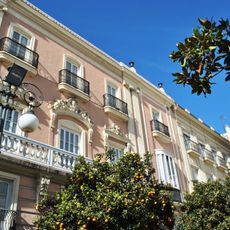
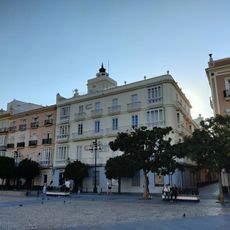
Palacio de Mora is a three-story house-palace on calle Ancha in Cádiz's historic centre, built in the mid-19th century by architect Juan de la Vega y Correa. Its marble façade is divided into three sections and an attic, with a round-arched doorway, a first-floor balcony on double marble columns carried by atlantes, and four large glazed miradores. Inside, a main patio, a rear patio and a garden are surrounded by balustraded galleries.
The palace was built in the mid-19th century to a design by the architect Juan de la Vega y Correa, in the Elizabethan style of a 19th-century townhouse. It was officially inaugurated on 30 September 1862 with a ball given by the Moreno de Mora family for the visit of Queen Isabel II and her husband Francisco de Asís. Ownership later passed through the Aramburu, Carranza and Picardo families to the Pries brothers, its present owners.
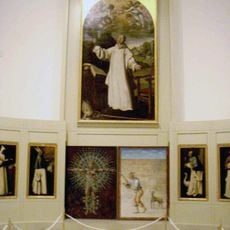
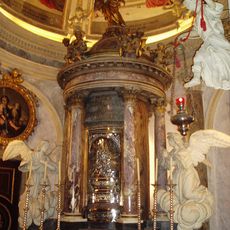
The palace has been a Bien de Interés Cultural since 1981 and keeps all its movable goods from the 1862 opening, including a clock collection and paintings by Juan de Arellano and Henry Bacon. Its chapel, the only one in Cádiz, holds a Seville-baroque Virgen del Rocío carved a century before the house opened. The library began as the seat of the Academia Hispanoamericana in Cádiz.
Visits take place on Wednesday mornings and are free of charge; no email booking is required. The palace stands on calle Ancha in the historic centre of Cádiz, and it remains a private residence, so access is limited to the rooms opened for the visit.
The marble columns, corbels and other elements of the palace were brought expressly from Carrara for this work. The chapel holds a carving of the Virgen del Rocío from the Seville school, made a century before the house opened in 1862.
The community of curious travelers
AroundUs brings together thousands of curated places, local tips, and hidden gems, enriched daily by 94,788 contributors worldwide.