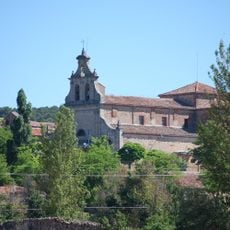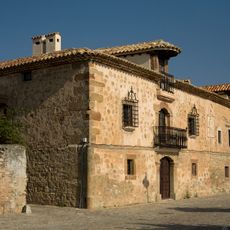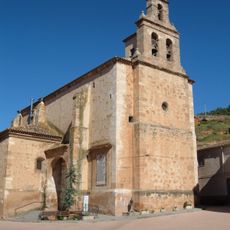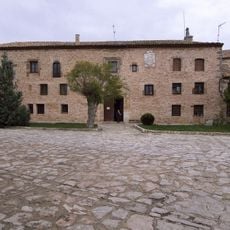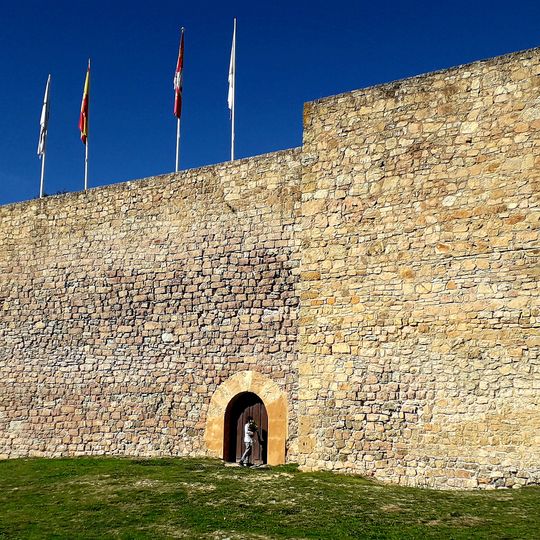
Castillo de Medinaceli, Medieval fortress in Medinaceli, Spain.
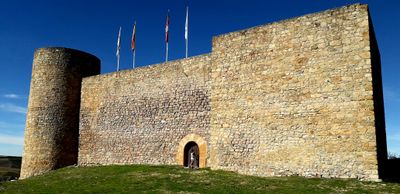
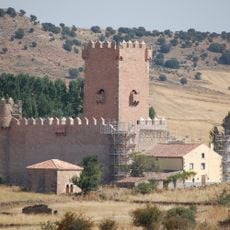
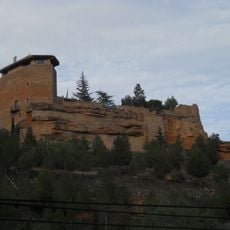
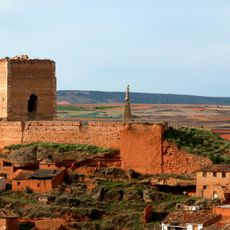
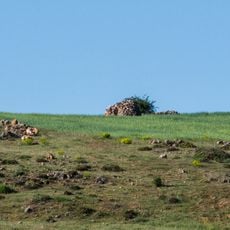
Castillo de Medinaceli stands at the western end of the Roman wall, rebuilt over the old Arab alcazaba of the upper town, of which only the underground stables survive. It is built of ashlar masonry on a square plan, with round towers at three corners and a rectangular keep, now truncated, at the eastern angle. Its thick walls are blind, opened only by the access gate with large voussoirs. It now serves as the town cemetery.
Medinaceli was already a crossroads settlement in pre-Roman times, and its Arabic name recalls the importance the Muslims gave it, defending it even after Toledo fell to the Christians. Almanzor died here in 1002. The castle was built in the 9th century and rebuilt in the 15th century, when the Dukes of Medinaceli lived in it before moving to the Ducal Palace.
The fortress shows how Islamic and Christian building styles merged in this region, visible in its thick stone walls and tower layout. Visitors can observe this architectural blend directly when walking around the structure.
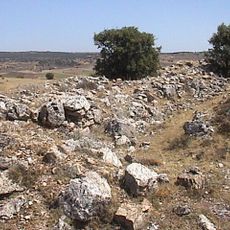
The castle stands at the western end of the Roman wall and now serves as the town cemetery, so access is limited to the exterior. The underground Arab stables are the only remains of the original alcazaba and are not open to visitors. The ground around the walls is uneven; good shoes help when walking the perimeter.
The castle has been Medinaceli's cemetery since the 15th-century rebuilding, so graves lie inside a square enclosure of ashlar masonry with round towers at three corners. The only opening in the blind walls is the access gate, framed by large voussoir stones. The keep in the eastern corner was later truncated.
The community of curious travelers
AroundUs brings together thousands of curated places, local tips, and hidden gems, enriched daily by 95,252 contributors worldwide.