Caldera de Taburiente National Park, National park in La Palma island, Spain
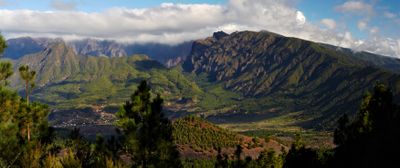
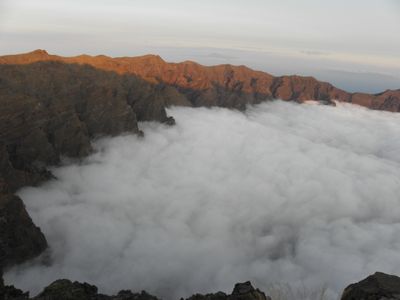
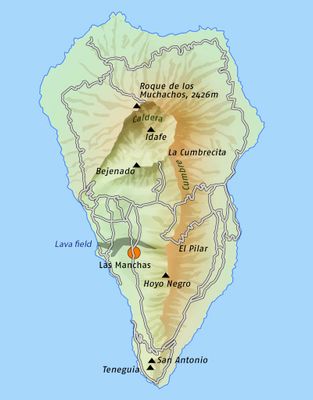
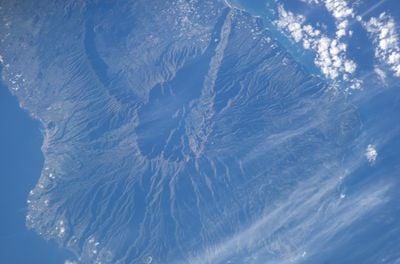
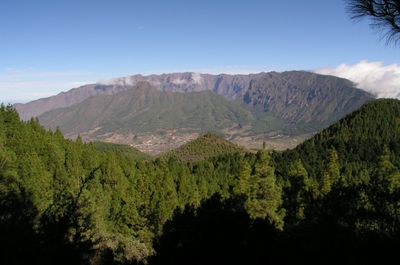
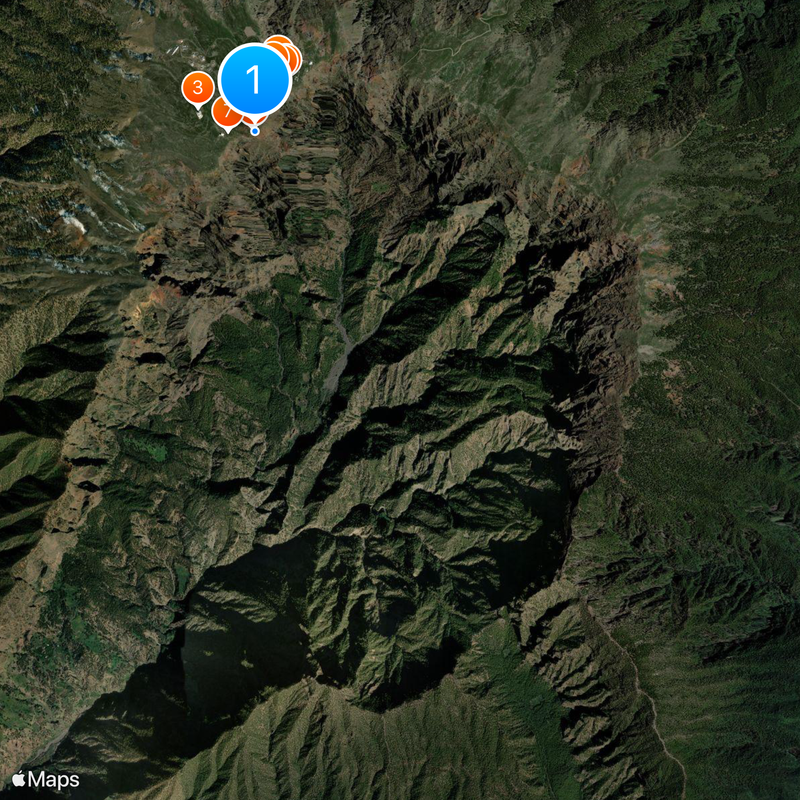
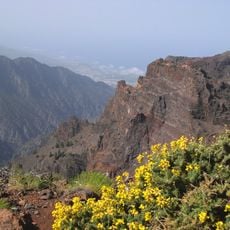
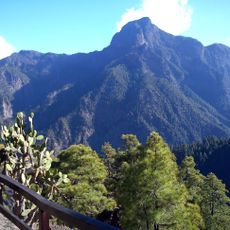
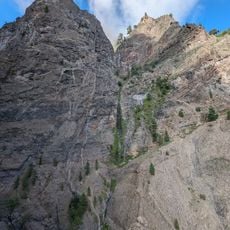
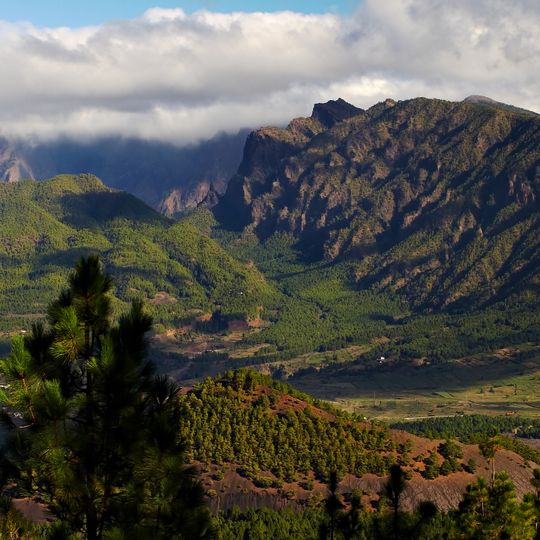
Caldera de Taburiente National Park is a protected area on La Palma island in the Canary Islands, presenting a massive erosion crater of volcanic origin. The floor of the basin sits around 430 meters (1410 feet) above sea level, while the surrounding peaks reach heights beyond 2400 meters (7874 feet), forming a natural barrier.
Caldera de Taburiente was declared a national park on 6 October 1954, the second in the Canary Islands after Teide and the fourth in Spain. Its depression is an erosion caldera, not a collapse crater: about 525,000 years ago the flank of a shield volcano collapsed in a landslide, and erosion later enlarged the valley. In 1815 the German geologist Leopold von Buch distinguished this erosional origin from volcanic calderas and introduced the term caldera into geology.
Taburiente is a Guanche word meaning "plain, level", not Spanish. In the 15th century the caldera was the last stronghold of the Benahoaritas, the island's indigenous people; the Spaniards took it only by luring their leader out under a pretext of talks. In the 1830s Sabin Berthelot and Felix-Achille St. Aulaire made artwork here combining geology and botany.
A visitor center in El Paso offers maps of the hiking routes and issues the permits required for overnight stays inside the park. Most trails run over rocky ground with steep climbs, so sturdy hiking boots and plenty of water are advisable.
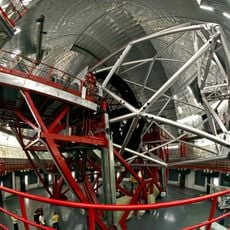
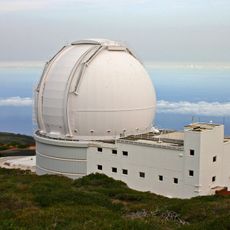
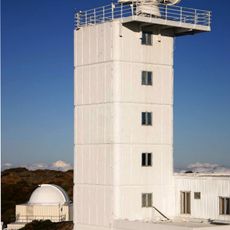
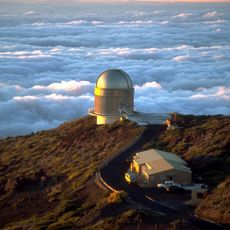
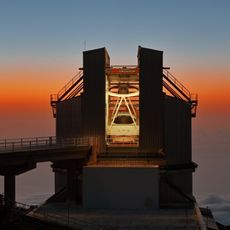
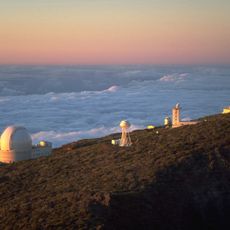
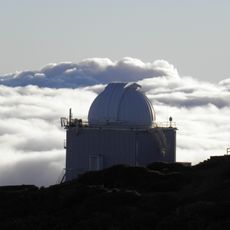
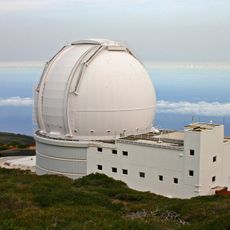
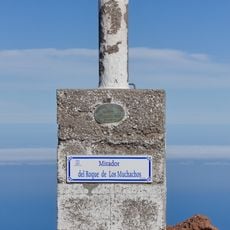
The caldera's rim reaches 2,426 m at Roque de los Muchachos, where the Roque de los Muchachos Observatory stands; its telescopes sit very close to the summit and can be reached by road. In 2022 the IUGS listed the Taburiente volcanic caldera among its 100 global geological heritage sites.
The community of curious travelers
AroundUs brings together thousands of curated places, local tips, and hidden gems, enriched daily by 93,468 contributors worldwide.