Cueva de Atxurra, Prehistoric cave in Berriatua, Spain
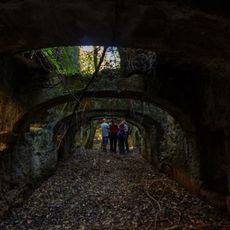
Cueva de Atxurra has two connected levels: the lower gallery runs about 300 metres and the upper about 700 metres, with a total surveyed length of 1,085 metres. The cave lies in Urgonian limestone of the Mereludi karst, near the Atxarre and Gaztelukoatxa summits. Its rock art, at least 70 engraved and sometimes black-painted animals, is in the upper level.
The upper entrance was long known, but the lower mouth was exposed in 1882 by blasting for the new Lequeitio–Marquina road. That year geologists Ramón Adán de Yarza and José María Solano Eulate made the first scientific visit, collecting paleontological and hydrogeological data. José Miguel Barandiarán identified an archaeological deposit at the upper entrance in 1929 and excavated it in 1934–1935.
The cave walls display 113 animal figures, including horses, bison, and deer, created using different techniques such as engravings and carbon black paintings.
The cave entrance remains closed to protect the resident bat colonies that inhabit the space. Visits are only possible with special permits and arrangements for research purposes.
The engravings were first spotted in 2015 by ADES cavers Iñaki Intxaurbe and archaeologist Diego Garate, who identified dozens of figures in three hours in a gallery missing from the 2011 survey. Earlier explorers had seen some engravings but lacked training to recognise them as Palaeolithic art.
The community of curious travelers
AroundUs brings together thousands of curated places, local tips, and hidden gems, enriched daily by 94,028 contributors worldwide.