Castle of Ateca, Medieval castle and fort in Ateca, Spain.
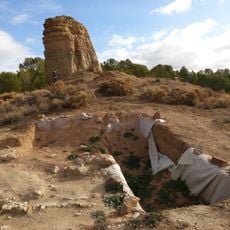
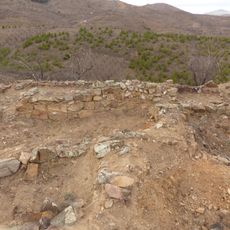
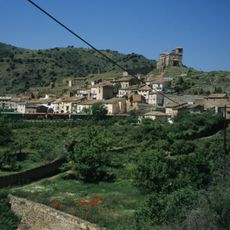
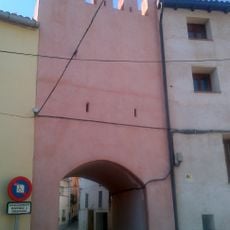
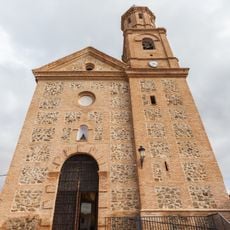
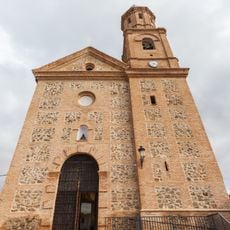
The Castle of Ateca is a 19th-century riflemen's fort built on the remains of earlier fortifications at the highest point of Ateca's old town. Its walls are of coursed masonry on natural rock, with some rammed-earth sections now almost gone. The tower-gate houses an 1838 guardroom with a small door framed by an alfiz for a drawbridge and machicolations above.
Documented in the 10th century as belonging to the Banu-Timlat, the castle was taken by El Cid in 1081 and incorporated into the Kingdom of Aragon by Alfonso I the Battler in 1120 after the Battle of Cutanda. In the War of the Two Peters it was reinforced in 1357 and conquered in 1362 by Pedro I of Castile, who put the garrison to the sword after a two-day resistance. In 1448 Juan II of Castile declined to attack it because it was armed with the bombards used at Calatayud in 1427. The present fort was rebuilt in 1837 by Pedro de Ybarreta for the First Carlist War.
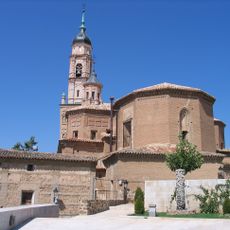
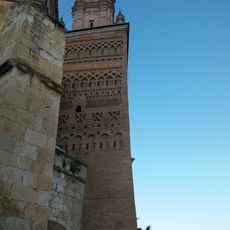
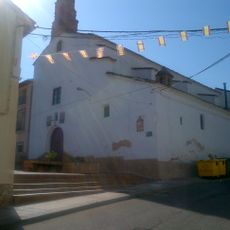
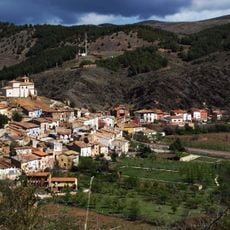
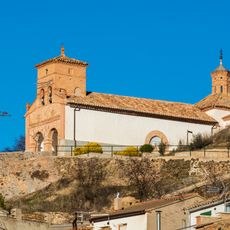
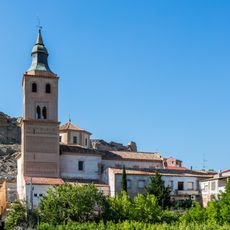
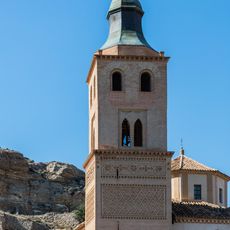
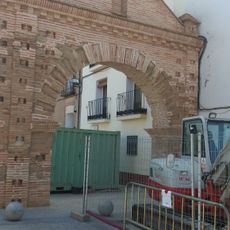
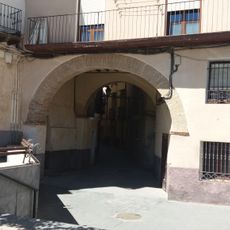
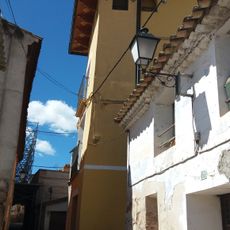
The castle, the fortified church of Santa María and the town wall, standing until the late 19th century with its gates and towers, formed Ateca's defensive system. The walls now merge with today's farmhouses, and remains appear in homes and public streets. The gate tower kept a guard post built in 1838.
The fort stands at the highest point of Ateca's old town, at the southern end of the castle esplanade. Its walls merge with those of the surrounding houses, so remains appear inside domestic buildings and public streets. The 2005 restoration left the battlements almost imperceptible.
The medieval castle covered more than ten times the area of the 19th-century riflemen's fort that survives at the southern end of the esplanade. The gate tower still holds a guardroom built in 1838, with a small door framed by an alfiz to fit a drawbridge.
The community of curious travelers
AroundUs brings together thousands of curated places, local tips, and hidden gems, enriched daily by 93,547 contributors worldwide.