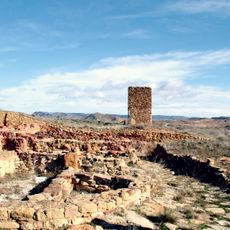
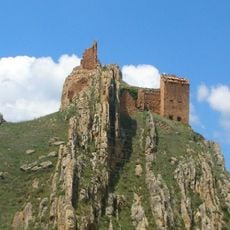
Pared de los Moros, Roman dam in Muniesa, Spain.
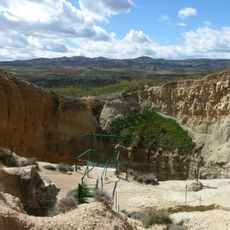
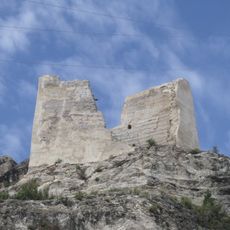
Pared de los Moros is a Roman gravity dam with an irregular polygonal plan of five wall sections set against Jurassic limestone in the Farlán stream bed. Its wall is 68 m long at the crest, up to 8.4 m high and 2.65 m thick at the centre, built as an opus caementicium core 70 cm thick faced with opus vittatum of grey limestone, yellowish sandstone and local conglomerate.
La Pared de los Moros is a Roman gravity dam dating to the 3rd century AD, built to store and channel the waters of the Farlán stream. Its polygonal plan of five wall sections follows the Jurassic limestone outcrops, and the preserved masonry reaches 8.4 m at its highest point. Two intake towers fed galleries that carried water downstream.
The name Pared de los Moros reflects a common Spanish practice of attributing Roman structures to Moorish construction, indicating historical misconceptions about architectural heritage.
The structure sits roughly 1.4 kilometers from Muniesa village and can be reached via rural roads. Its location on Jurassic limestone outcroppings makes the ground uneven, so appropriate footwear is recommended.
The dam features two water intake towers attached to the core structure, forming a classical tower-gallery system for water control. This system allowed Romans to regulate water flow precisely for irrigated areas downstream.
The community of curious travelers
AroundUs brings together thousands of curated places, local tips, and hidden gems, enriched daily by 94,842 contributors worldwide.