Palace of the Kings of Aragon, Medieval royal residence in Huesca, Spain.
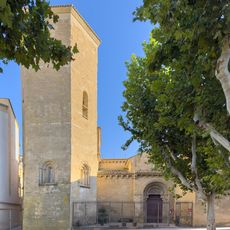
The Palace of the Kings of Aragon in Huesca consists of a rectangular tower crowned with battlements and the adjoining Salón, a rectangular hall transformed in the 17th century. The hall is covered by two pointed Gothic arches and has three arched doors on its longer sides, some walled up. The lower floor of the Torre de la Zuda is reached by steps under a portal and covered by a ribbed vault with semicircular apses.
Construction of the palace began in the late 12th century when it served as a residence for Aragonese monarchs. The building was later converted into a university, which shaped its role in the city's academic and cultural development.
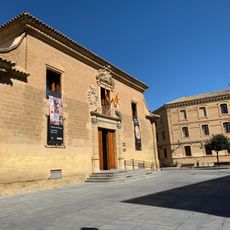
The palace is known as Palacio Real, and its lower hall, the Sala de la Campana, is the setting of the legend of the Campana de Huesca. Above it, the Sala de Doña Petronila is where tradition places the marriage of Petronila, daughter of Ramiro II, and Ramón Berenguer IV, count of Barcelona. Since 1611 the site has housed the Museo de Huesca.
The palace stands in the old town of Huesca and now houses the Museo de Huesca. The surviving tower and the Salón are reached through the museum; the lower floor of the Torre de la Zuda is entered after descending a few steps beneath an ornate doorway. The upper hall, the Sala de Doña Petronila, is reached by a modern staircase.
The Torre de la Zuda, the lower room of the palace, is covered by a ribbed vault whose ribs rest on an impost band running around the walls; its east and west sides end in two semicircular apses with small splayed windows. Tradition places the legend of the Bell of Huesca in this space.
The community of curious travelers
AroundUs brings together thousands of curated places, local tips, and hidden gems, enriched daily by 95,320 contributors worldwide.