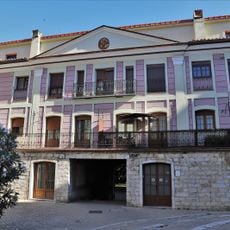
Monastery of San Quirce and Santa Julita, Cistercian convent on Plaza de la Trinidad, Valladolid, Spain
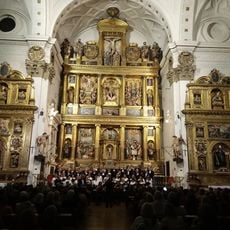
The Monastery of San Quirce and Santa Julita is a Cistercian building with a Latin cross layout and Doric architectural style decorated with geometric plasterwork throughout. The main altar spans the entire apse wall with elaborate religious carvings.
Founded in 1256 as Santa María de las Dueñas on the right bank of the Pisuerga, the monastery moved to the Plaza de la Trinidad; Juan Antolínez de Burgos dated the transfer to the first Castilian Civil War, while Matías Sangrador placed it earlier, citing wills of Queen María de Molina and Teresa Gil from the first third of the 14th century. Enrique II exempted the nuns' gardener from taxes because their garden across the river was hard to work. The church was renovated in the 16th–17th centuries, and the convent was dissolved in 2016.
The monastery is named after Saints Quiricus and Julitta, a child and his mother martyred in Tarsus under Diocletian; their cult passed into Spain through relics and calendars. The house also serves as seat of the Penitential Brotherhood of the Sacred Passion of Christ, which holds its functions in the church.
The monastery stands on Plaza de la Trinidad, with the Calle de San Quirce running alongside; the monastic buildings were replaced by a new construction from 1970 onward. The convent was dissolved in 2016, so the church and its retables are what remain to be seen. The church was renovated in the 16th and 17th centuries, and its baroque choir was renewed in 1744.
The 1636 Pisuerga flood destroyed the church's choir, which was rebuilt in Baroque style only in 1744. In the 17th century the architect Francisco de Praves built convent buildings, including a private chapel commissioned by the nun María de Colón. The convent was dissolved in 2016.
The community of curious travelers
AroundUs brings together thousands of curated places, local tips, and hidden gems, enriched daily by 93,607 contributors worldwide.