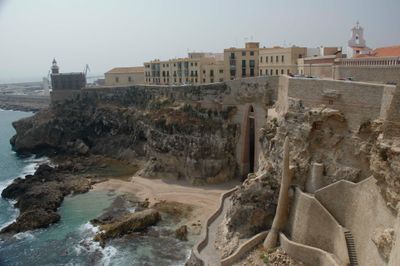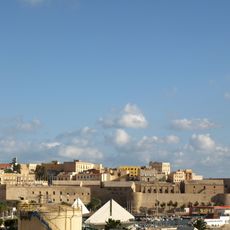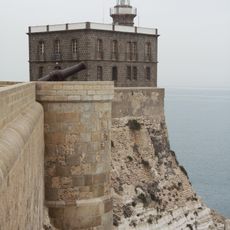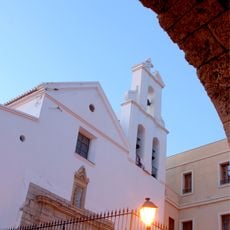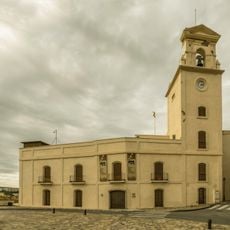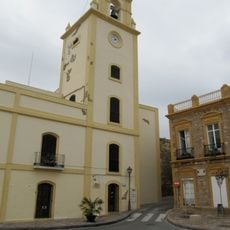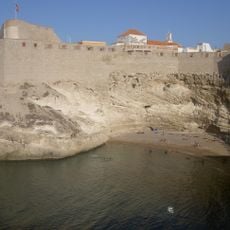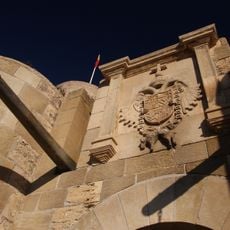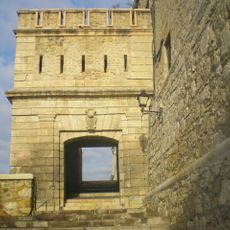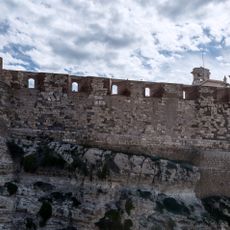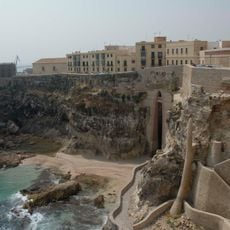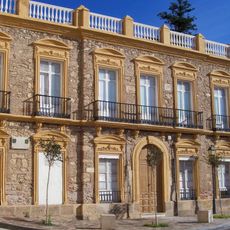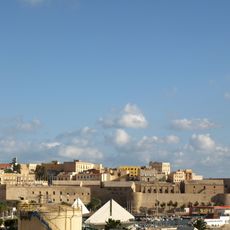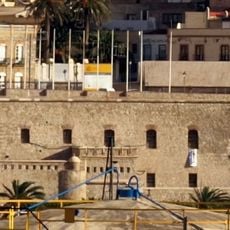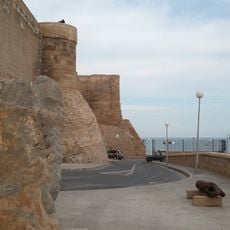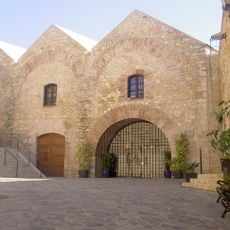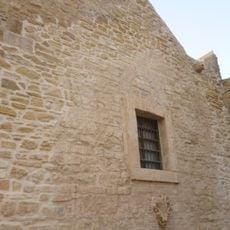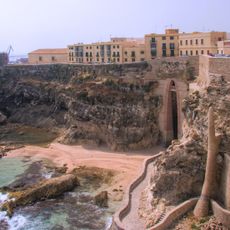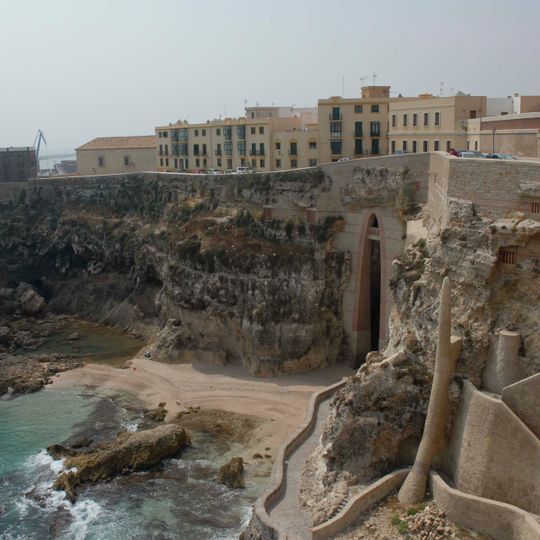
Cuevas del Conventico, Melilla, Cave system in Melilla la Vieja district, Spain.
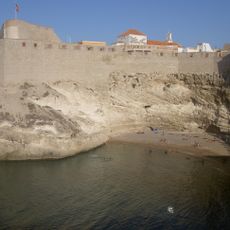
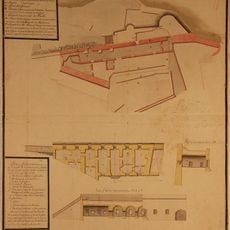
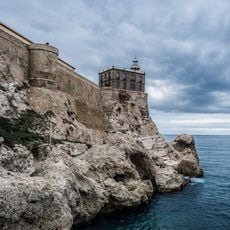
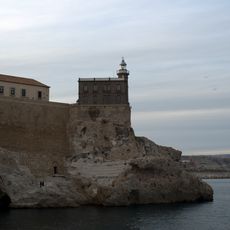
Cuevas del Conventico is a cave system with three distinct levels carved into rock and containing multiple interconnected chambers overlooking coastal cliffs. The structure includes sleeping niches and passages that connect smaller rooms throughout the lower reaches.
The cavities formed naturally in the sandstone cliff through marine erosion of the old Cala de Trápana, and Phoenicians, Romans and Arabs used them as a coastal shelter for boats and sailors, though no structures from that era survive. During the siege of Melilla of 1774-1775 the caves were fitted out as stores, shelter for civilians and clergy, and a place for religious acts, with internal enlargements and partitions. In 1925 the port works filled the cove with sand, creating today's Trápana beach and changing sea access.
The first level was adapted as an underground chapel during the siege of 1774-1775, and its floor plan recalls the shape of a papal cross. Religious services were held there in emergency conditions, and the adjoining museum now displays the Colección de Arte Sacro, whose restoration began in 2023.
The caves are explored through narrow passages and different levels, so sturdy shoes and caution are necessary. It is best to visit early in the day since lighting depends on natural openings and navigation becomes harder as daylight fades.
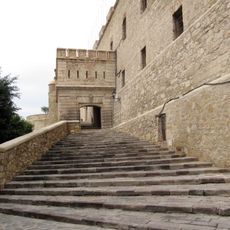
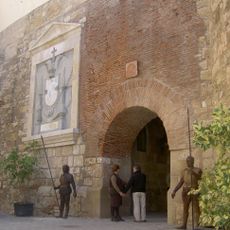
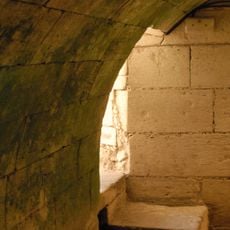
The caves connect underground to the Fuerte de Victoria Grande and Parque Lobera, letting troops and supplies move during sieges without exposure to enemy fire. A parabolic arch of stone and brick, added in the modern reforms, joins the outer entrance to the first underground level.
The community of curious travelers
AroundUs brings together thousands of curated places, local tips, and hidden gems, enriched daily by 93,742 contributors worldwide.