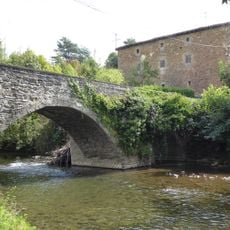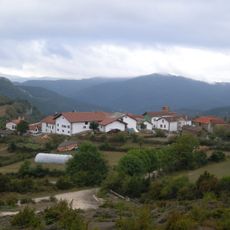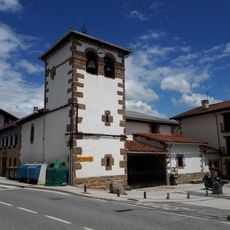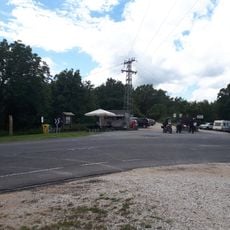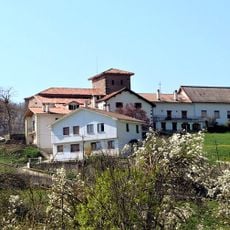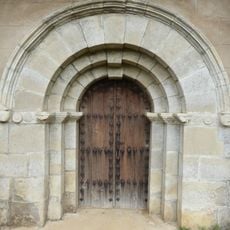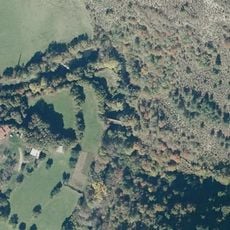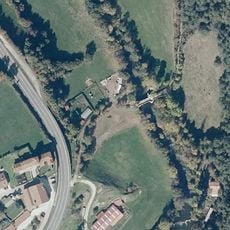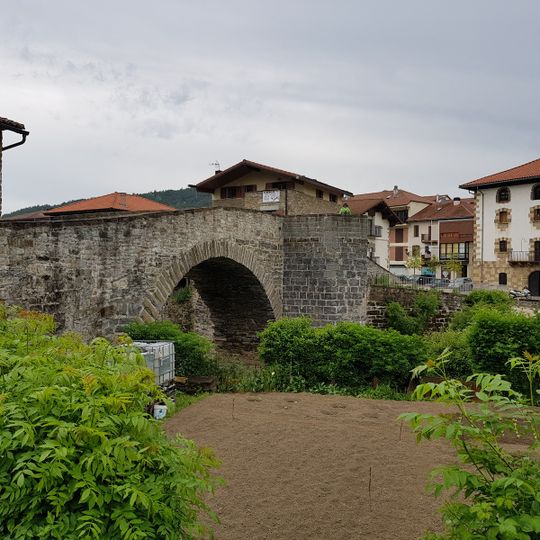
Puente de la Rabia, bridge in Esteribar, Spain
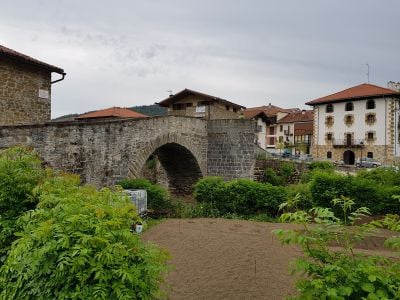
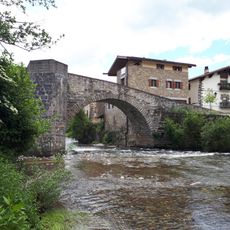
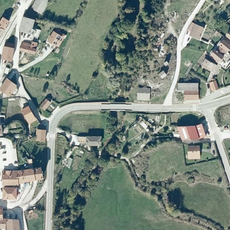
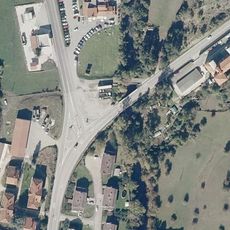
The Puente de la Rabia is an old stone bridge crossing the Arga river in Zubiri, dating back to the twelfth century. The structure features a curved arch design with two openings allowing water to flow freely, and a central round pillar that reinforces the construction.
The bridge was built in the twelfth century and in 1097 was granted to the Church in Pamplona along with the village of Zubiri by King Pedro I. This event established it as the settlement's focal point and a key crossing for pilgrims traveling to Santiago de Compostela.
The name Zubiri means 'town of the bridge' in the Basque language, showing how central this crossing has been to the community for many centuries. Visitors today notice how the structure remains woven into daily village life, with locals and pilgrims regularly passing across its stones.
The bridge is easily accessible on foot and forms part of the well-known Camino de Santiago walking route. Visitors should wear sturdy footwear and can explore the surroundings best during daylight hours when views of the river and village are clearest.
A local legend holds that animals passing under or crossing the structure are healed or protected from rabies. This healing belief was widespread until the 1940s when the rabies vaccine was introduced, making the bridge a site of folk faith long before modern medicine.
The community of curious travelers
AroundUs brings together thousands of curated places, local tips, and hidden gems, enriched daily by 60,000 contributors worldwide.