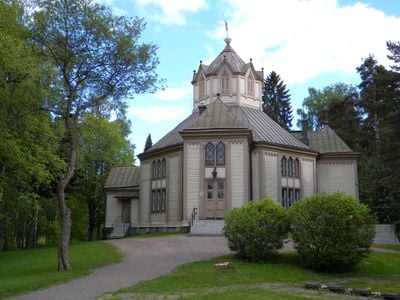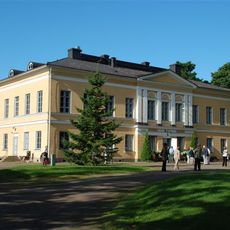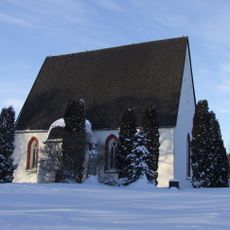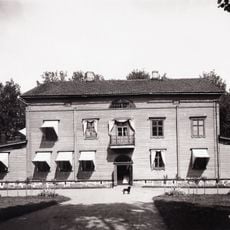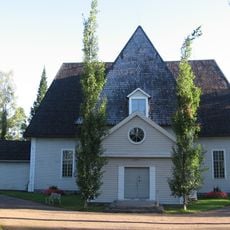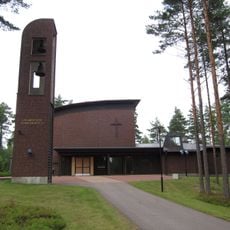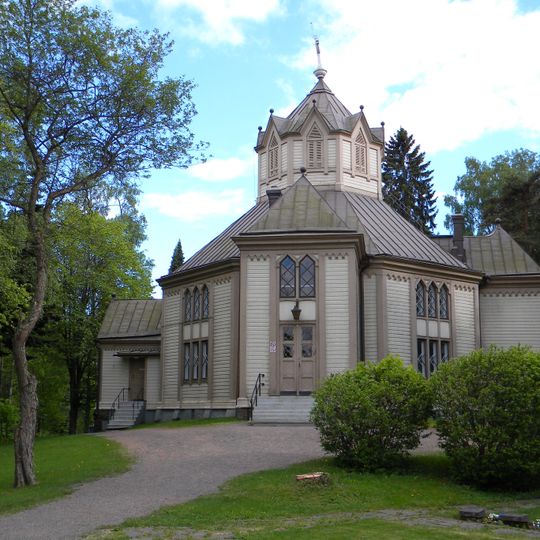
Ruotsinpyhtää Church, Gothic Revival church in Loviisa, Finland.
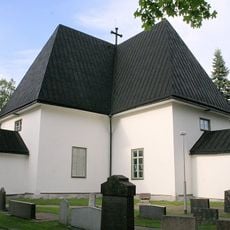
Ruotsinpyhtää Church is an octagonal wooden structure built in the Gothic Revival style, positioned on elevated ground with pointed arches marking its facade. The building combines traditional Finnish wooden construction with neo-Gothic architectural details throughout.
The church was built in 1771 on the Swedish side following the 1743 Treaty of Åbo, which divided Pyhtää village between Sweden and Russia. This border division shaped the establishment of the building as part of Swedish settlement in the region.
The church displays an altarpiece painted in 1898 by Finnish artist Helene Schjerfbeck, connecting religious space with the country's artistic heritage. Visitors notice how this work represents an important moment when national artists contributed to sacred interiors.
The building functions as an active place of worship open to visitors who wish to explore its architectural features. Its elevated location makes it readily visible and accessible from the surrounding community.
The building forms part of Strömforsin ruukkiyhdyskunta, a former iron-working settlement where industrial activity and religious life developed side by side. Visitors can sense how this industrial heritage shaped the community where the church stood.
The community of curious travelers
AroundUs brings together thousands of curated places, local tips, and hidden gems, enriched daily by 92,149 contributors worldwide.