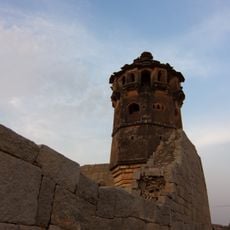
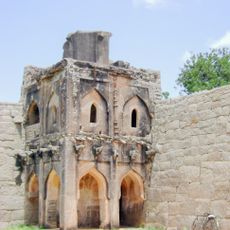
Brahmagiri archaeological site, human settlement in India
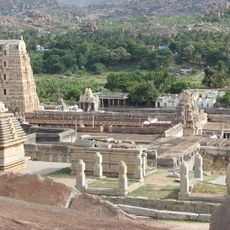
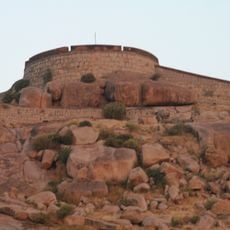
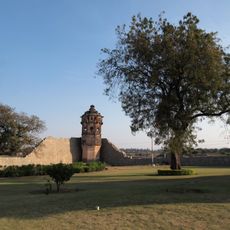
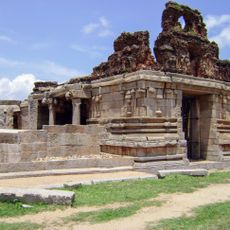
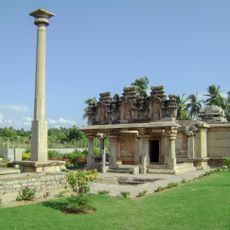
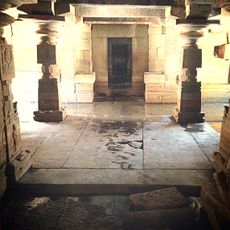
Brahmagiri is an archaeological site in Karnataka, India, situated on a flat-topped granite outcrop that rises about 590 feet (180 meters) above the surrounding terrain. The site spans roughly 1,640 feet (500 meters) from east to west and contains layered remains of human occupation spanning thousands of years.
The site was first explored in 1891 by archaeologist Benjamin L. Rice, who discovered inscriptions made by Emperor Ashoka that revealed the location was formerly called Isila and marked the southern frontier of the Mauryan Empire. Major excavations led by Mortimer Wheeler in 1947 uncovered ten graves containing artifacts spanning from the Neolithic period through the early historic era.
The site holds significance in local legends, particularly through the story of the sages Gautama Maharishi and his wife Ahalya, whose narrative remains central to the area's spiritual traditions. This connection between ancient wisdom and the land is part of what gives the place meaning for those who visit.
The site is situated in a rural area of Karnataka with semi-arid conditions, receiving most rainfall during the southwest monsoon season. Visitors should wear appropriate footwear for rocky, uneven terrain and bring sun protection when exploring the site.
The site contains mysterious small holes called cupules on stones and boulders, whose purpose and origin remain puzzling to researchers. These enigmatic markings represent some of the most intriguing features that visitors encounter, hinting at ancient practices that archaeologists have yet to fully understand.
The community of curious travelers
AroundUs brings together thousands of curated places, local tips, and hidden gems, enriched daily by 91,125 contributors worldwide.