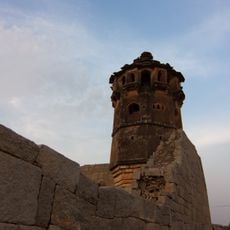
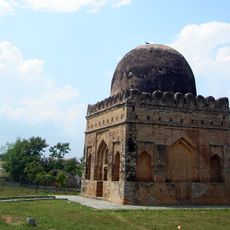
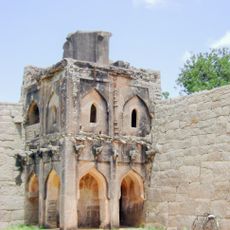
Vijayanagara, Archaeological site in Hampi, Karnataka, India
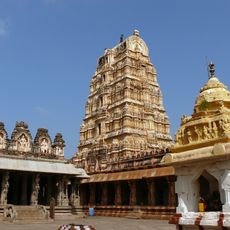
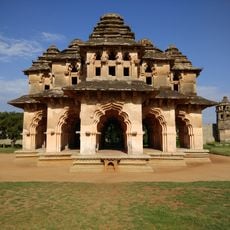
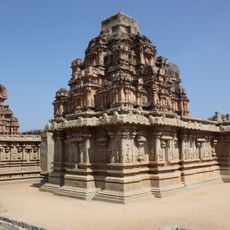
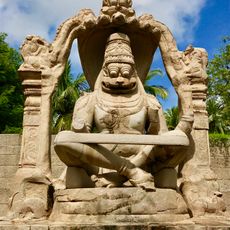
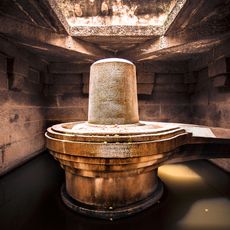
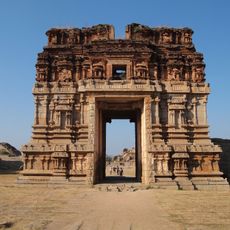
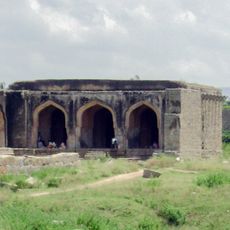
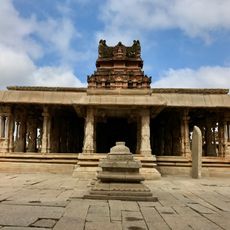
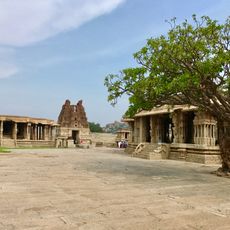
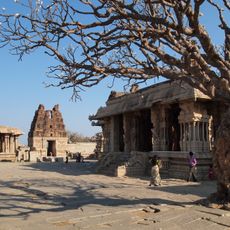
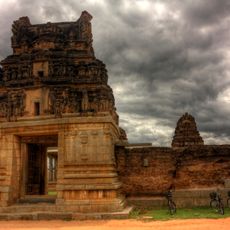
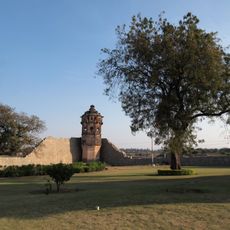
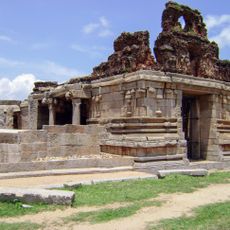
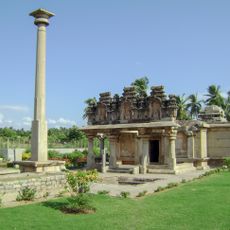
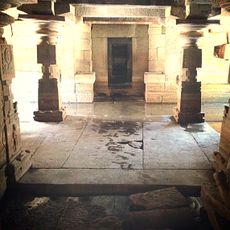
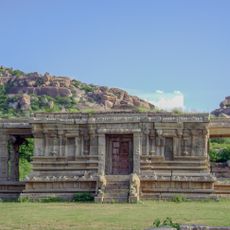
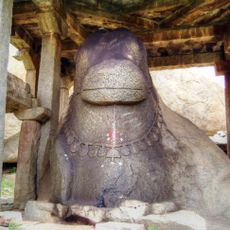
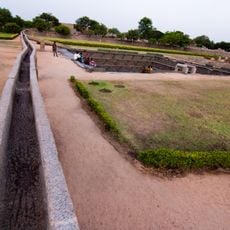
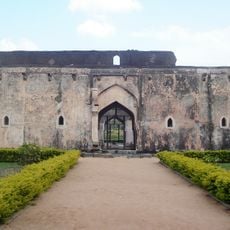
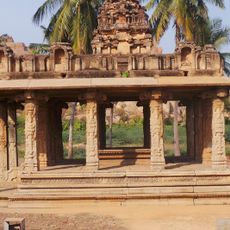
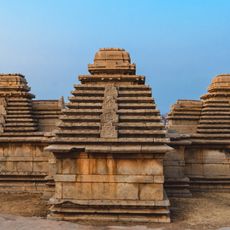
Vijayanagara lies on the banks of the Tungabhadra River in Karnataka, its core covering more than 40 square kilometres of a boulder-strewn landscape. The Virupaksha temple complex, built between the 13th and 17th centuries, forms the main part of present-day Hampi village, with two enclosures and towers; a road opposite it runs half a mile east toward a sculpture of Nandi. The ruins include the Krishna temple, the 20-foot Ugra Narasimha image and the Sugriva cave.
The city was founded in 1336 by brothers Harihara and Bukka Raya and grew into the capital of an empire controlling southern India until 1565. This rule shaped southern India deeply for over two centuries.
Hampi takes its name from Pampa, another name of the goddess Parvati, who according to the Sthala Purana performed asceticism on Hemakuta hill to bring Shiva back to householder life; Shiva is called Pampapati, husband of Pampa. The Virupaksha temple, built between the 13th and 17th centuries, is still in worship today, and the road before it runs half a mile east toward a sculpture of Nandi.
The site spreads across a large area, so sturdy footwear and plenty of water are necessary for walking through it. The best time to visit is during cooler months when exploring is more comfortable.
Around 1500, this city was the second largest of the medieval world, with only Beijing being larger. Merchants from Persia and Portugal came here to trade and added to the cosmopolitan nature of the settlement.
The community of curious travelers
AroundUs brings together thousands of curated places, local tips, and hidden gems, enriched daily by 94,042 contributors worldwide.