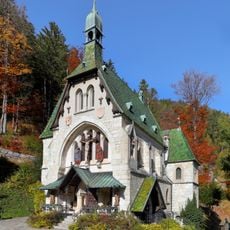
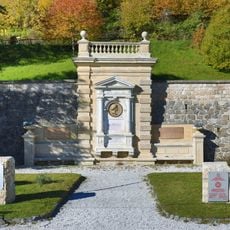
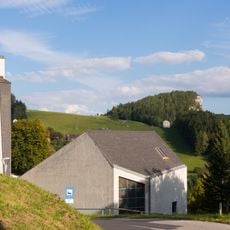
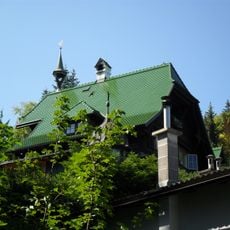
Semmering railway, Railway line in Lower Austria and Styria, Austria
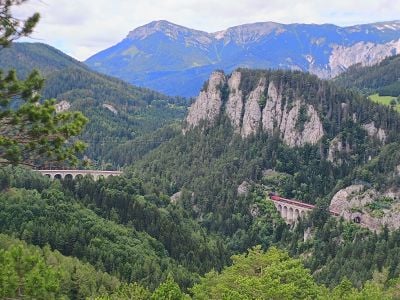
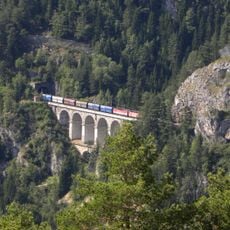
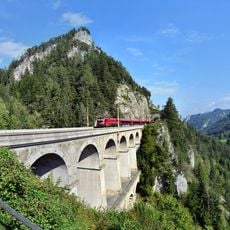
The Semmering railway is a railway line that stretches about 41 kilometers from Gloggnitz to Mürzzuschlag through the mountains, climbing over 450 meters in elevation while doing so. The route crosses many viaducts and passes through tunnels built across difficult terrain.
Engineer Carl Ritter von Ghega directed construction of this mountain railway between 1848 and 1854, creating the first standard-gauge mountain railway in Europe. This design became a model for many other Alpine railways across the continent.
The railway takes its name from the Semmering Pass, a mountain crossing that shaped regional trade routes for centuries. Visitors can still see how this route remains important for connecting communities across the Alpine landscape.
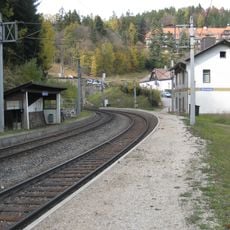
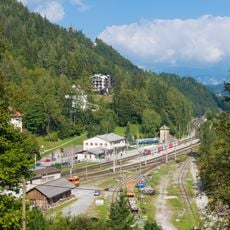
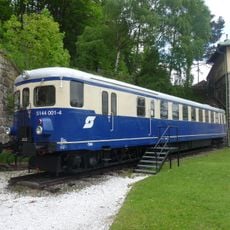
Regular passenger trains operate daily on the route, connecting Vienna to southern Austria, and visitors can choose between scheduled services or slower scenic trains. A parallel hiking trail allows you to explore the route on foot and view different sections from various angles.
The line uses adhesion alone, with no rack rail: Carl von Ghega pushed through a design others thought impossible without cog or cable haulage. The Engerth locomotives supplied from November 1853 to May 1854 articulated the tender to add adhesive weight, reaching 19 km/h uphill on 1-in-40 grades.
The community of curious travelers
AroundUs brings together thousands of curated places, local tips, and hidden gems, enriched daily by 94,300 contributors worldwide.