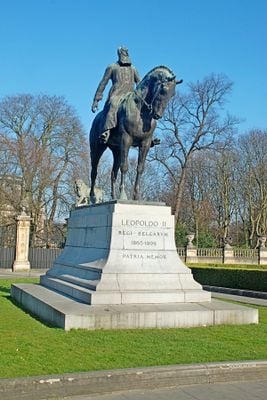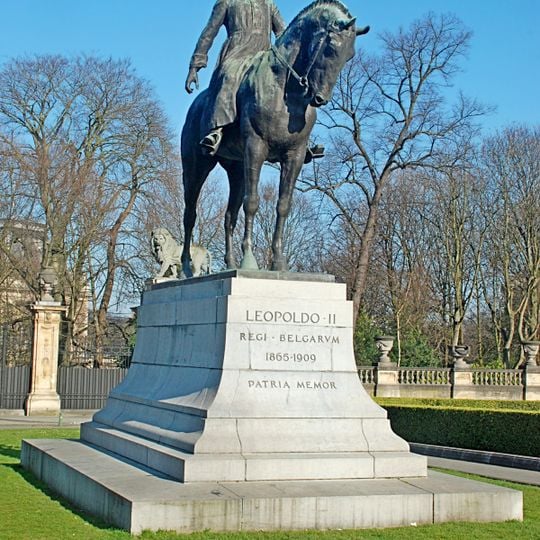
Equestrian statue of Leopold Ⅱ, Bronze equestrian statue in Royal Quarter, Belgium.
The equestrian statue of Leopold II is a bronze figure mounted on a bluestone base, showing the Belgian king on horseback at the Place du Trône in Brussels. The work was designed by Thomas Vinçotte and completed after his death by François Malfait, then unveiled in 1926.
Leopold II was the second king of the Belgians, reigning from 1865 until his death in 1909, and he personally controlled the Congo Free State from 1885 to 1908 before pressure from other nations forced him to hand it over to Belgium. The statue was unveiled years after his death, at a time when public memory of his reign was still shaped largely by official accounts.
The statue stands in the open and is visible to anyone passing through the area on foot. It has repeatedly been the target of paint and graffiti by people protesting Belgium's colonial past, making it a living point of debate rather than a forgotten monument.
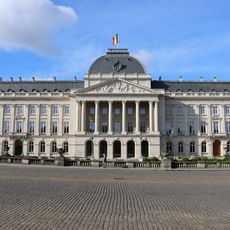
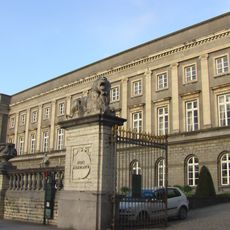
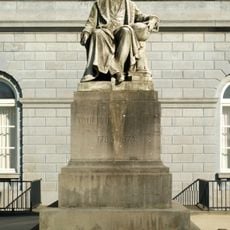
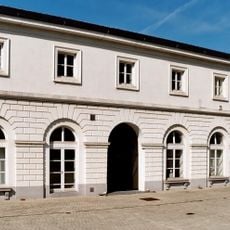
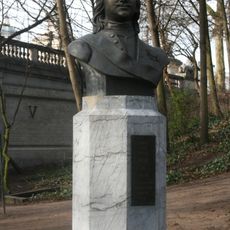
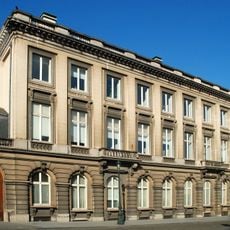
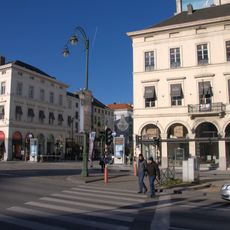
The statue stands outdoors on the Place du Trône, near the Royal Palace of Brussels and the Parc de Bruxelles, and can be visited at any time of day. The surrounding area is easy to cover on foot, with several other points of interest within a short walk.
The bronze used for the statue came from the Union Minière du Haut-Katanga, a company that extracted minerals from the Congo. This means the raw material of the monument is directly tied to the same region over which Leopold II held personal control.
The community of curious travelers
AroundUs brings together thousands of curated places, local tips, and hidden gems, enriched daily by 91,810 contributors worldwide.