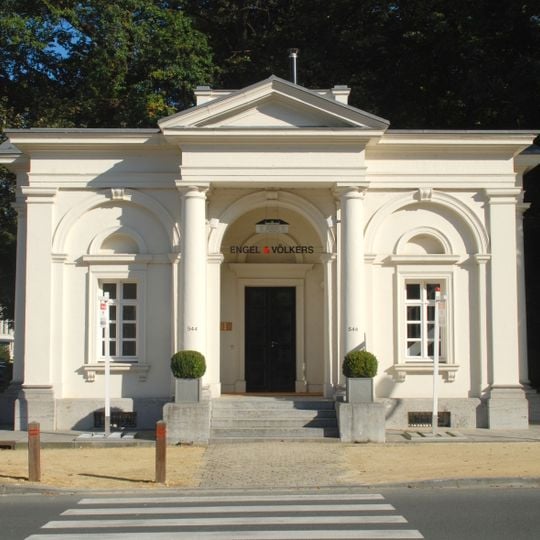
Former toll booths of Namur Gate, Neoclassical buildings that originally stood at the Porte de Namur in Brussels and were moved to the entrance of the Bois de la Cambre
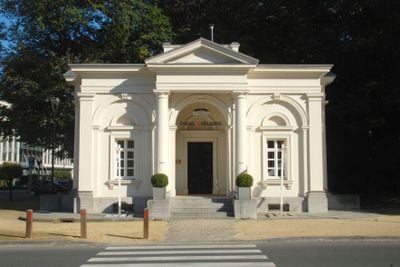
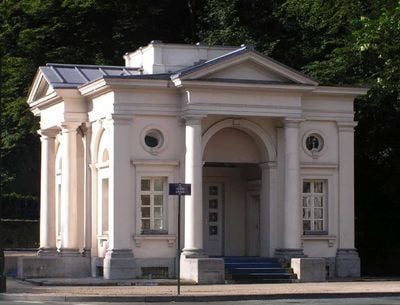
The former toll pavilions of the Namur Gate are two symmetrical one-storey neoclassical buildings in cream-white painted masonry on a grey stone base. Each has a central projecting porch framed by paired smooth round columns and a triangular pediment; one porch shelters an arched opening with dark double doors up a short flight of grey stone steps, the other a recessed doorway reached by four blue steps. Tall rectangular windows with white glazing bars sit beneath arched recesses, and a low pitched roof runs behind the pediment.
Constructed between 1834 and 1836 by architect Auguste Payen as part of Brussels' octroi wall system, these toll booths were relocated in 1862 from Namur Gate to their current position at Bois de la Cambre entrance.
The pavilions represent 19th-century administrative practices and urban control systems in Brussels, embodying neoclassical architectural principles of symmetry, order, and classical decorative elements that reflected the era's civic values.
Located at 544 and 589 Avenue Louise, the pavilions currently house the LMNO contemporary art gallery, which organizes exhibitions combining art and life sciences in this protected monument setting.
The two pavilions stand about 38 metres apart on either side of Avenue Louise, facing each other across the roadway. Each was dismantled and rebuilt at its present spot in 1862, when the old Namur Gate octroi barrier was cleared. Look for the small dark sign reading "LOUISE LOUISA" in front of one of them.
The community of curious travelers
AroundUs brings together thousands of curated places, local tips, and hidden gems, enriched daily by 93,651 contributors worldwide.