Royal Palace of Brussels, Royal palace in Brussels, Belgium
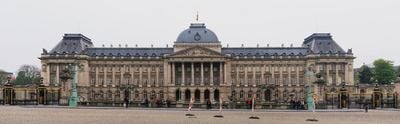
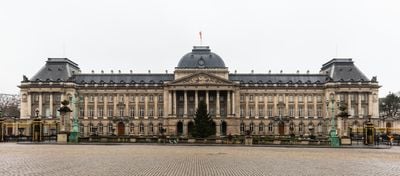
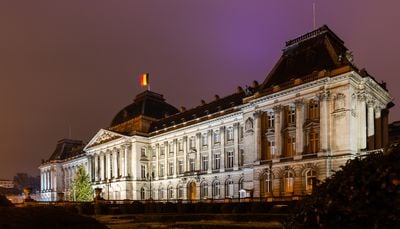
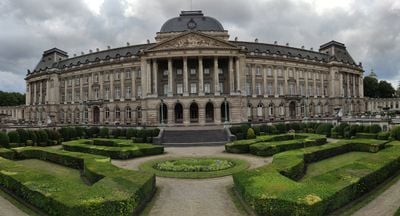
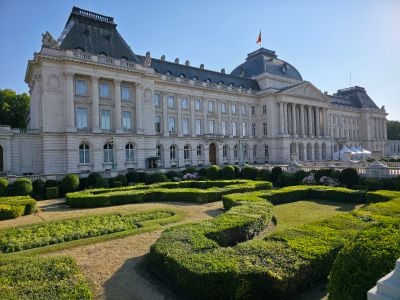
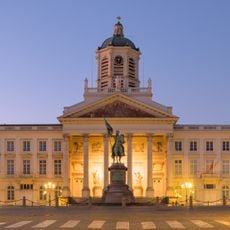
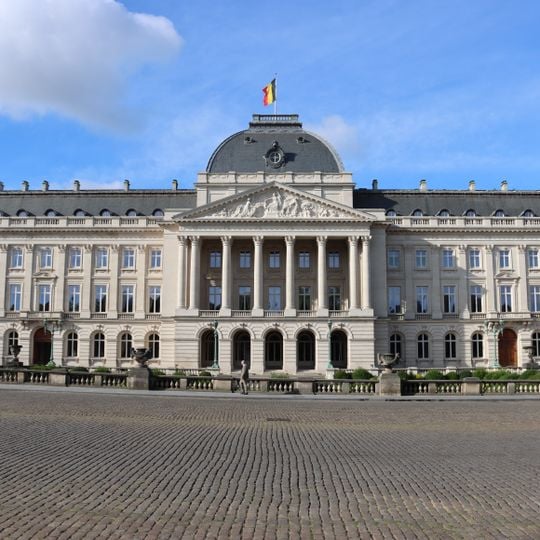
The Royal Palace of Brussels presents a long, symmetrical neoclassical facade in pale stone. Its central block has a six-column portico with a triangular pediment carved with relief figures, three arched doorways below, and a dark bell-shaped roof with a clock face and flag. Wings with rows of tall windows across three storeys extend to either side, and a low stone balustrade with small urns runs along the base above a cobbled forecourt.
The palace's site was occupied by the Coudenberg palace, which burned on 3 February 1731. In 1816 William I of the Netherlands had two mansions joined by a gallery over Rue Héraldique, finished around 1829. After 1900 Leopold II replaced the façade with Henri Maquet's design, completed by Octave Flanneau.
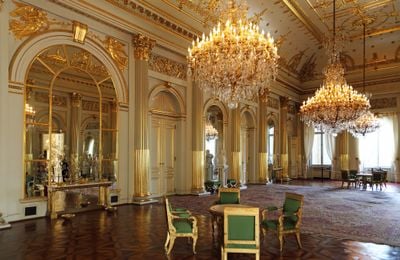
The palace is the King's workplace, not his home; the royal family lives at Laeken. Its name comes from the Place des Palais, plural because the Prince of Orange's palace (1823, now the Academy Palace) stood beside it. The State Rooms host receptions, concerts and award ceremonies, and the interior mixes neo-Louis XVI decoration with surviving Austrian and Dutch rooms.
The building is open to visitors during specific months, so check ahead to see which rooms are accessible on your visit. Comfortable shoes are advisable since you will walk through multiple staircases and lengthy corridors.
The Mirror Room features a ceiling artwork made from jewel beetle shells, a refined technique that plays with light and color in unexpected ways. The nearby Goya Room displays tapestries based on designs by the Spanish artist, placing his work in a royal context.
The community of curious travelers
AroundUs brings together thousands of curated places, local tips, and hidden gems, enriched daily by 93,326 contributors worldwide.