Gongkar Chö Monastery, Tibetan Buddhist monastery in Gonggar County, Shannan, China
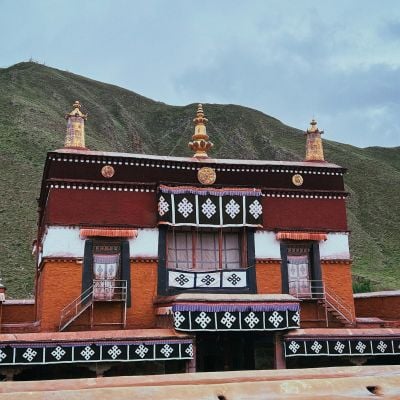
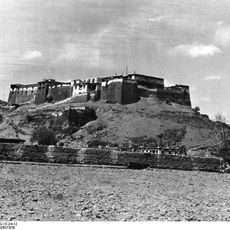
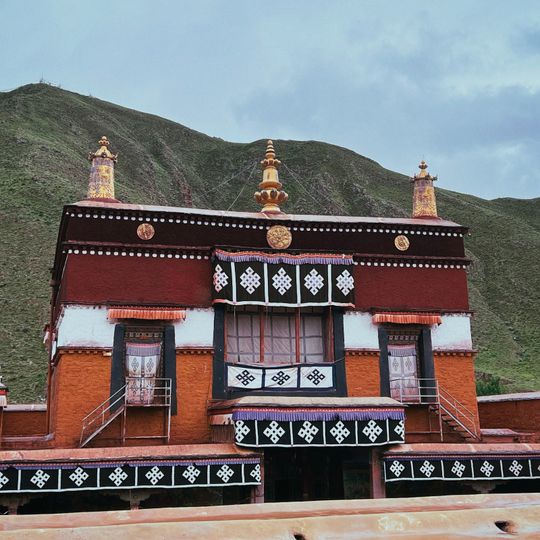
Gongkar Chö Monastery stands on a hilltop cliff in Gonggar County, Lhoka, on the south side of the Tsangpo River. Its three-storey main building contains a 64-pillared assembly hall with new statues of Sakya Pandita, Sakyamuni Buddha, Guru Padmasambhava, Drolma and Dorje Denpa, plus the Shedra monastic college and the Rinpoche's quarters.
Founded in 1464 by Thutön Kunga Namgyal (1432–1496), the monastery became the mother house of the Sakya school's Gongkar branch. In the 16th century Jamyang Khyentse Wangchuk painted murals in the Khyenri style, which originated here. During the Cultural Revolution the main hall served as a barley silo and murals were defaced with Maoist slogans; restoration followed in the 1980s.
The monastery gives its name to the Gongkar or Dzongpa branch of the Sakya school, founded here by Tüton Kunga Namgyal. Monks hold morning painting classes and afternoon debating sessions at the Shedra, and each year from the 6th to the 15th day of the first lunar month they perform Mandala rituals.
The monastery lies on a hilltop cliff in the Gongkar valley, 400 metres south of the Lhasa road and 75 kilometres from Lhasa. The Shedra holds painting classes in the morning and debating classes in the afternoon. Circumambulate clockwise; the Shedra appears to the left in the northern part of the complex.
The monastery is where the Khyenri school of Central Tibetan painting originated. In the 16th century Jamyang Khyentse Wangchuk (born 1524) painted its murals, and the inner sanctum keeps frescos of the Sakya founders in that style, with Chinese influence visible in the work.
The community of curious travelers
AroundUs brings together thousands of curated places, local tips, and hidden gems, enriched daily by 94,477 contributors worldwide.