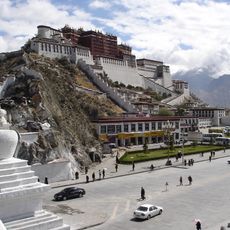
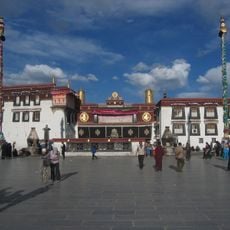
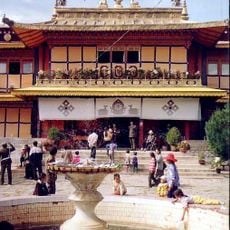
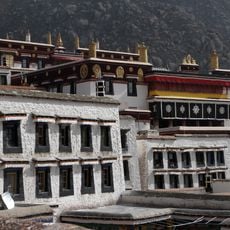
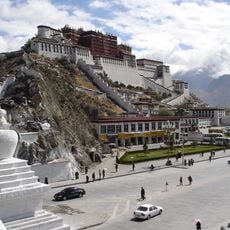
Gonggar Dzong, Ruined dzong in Gonggar County, Tibet, China
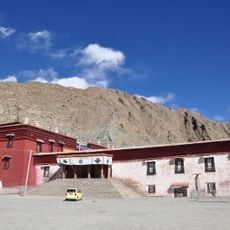
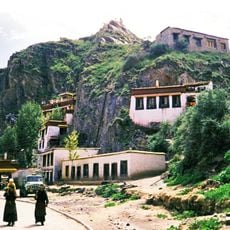
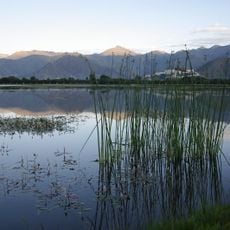
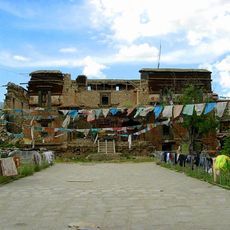
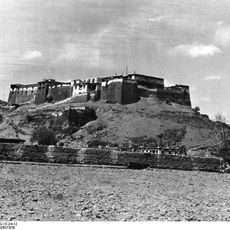
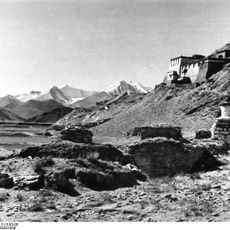
Gonggar Dzong is a ruined hilltop fortress in Gonggar County, Shannan, Tibet, built on the pattern of the Potala Palace in Lhasa. It stands at 4,076 metres near the confluence of the Tsangpo and Kyichu Rivers, on the Gyido Xoi hill above a settlement with a tall prayer flag pole. Most of the structure is in ruins.
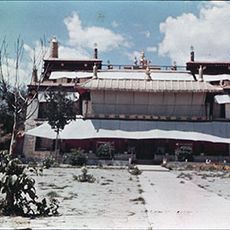
Gonggar Dzong was the seat of the Gongkar governors, whose Dzongpon controlled farmland on the south bank of the Tsangpo from Chowo Ri to Rawame. The present fortress on Gyido Xoi hill served as capital of Gonggar from the 17th century until 1960, when the administration moved to Gyixung in 1962. An earlier dzong stood at Zhug Dêqên Qoikor Monastery in Naiser from the 14th to the 17th century. Hugh E. Richardson photographed the fort in 1950, before it was reduced to ruins.
The dzong was the seat of the Gongkar clan chiefs, whose domain remained a centre of Sakyapa power until the late 15th century. Dorje-denpa Kun-ga Namgyal, holder of the Dzongpa tradition of the Sakya school, trained in Sutra, Tantra and tantric rituals with masters of all traditions. The nearby Gonggar Choede Monastery, founded after a scripture leaf blew from his roof, was looted during the Cultural Revolution.
The site sits at high altitude, so visitors should allow time for acclimatization and bring clothing for cold conditions. Access is easier during warmer months when roads and paths are more passable.
A page from the Vajradhatu scripture, blown from the roof during a founder's recitation of sacred texts, determined the exact location of a nearby sister monastery. This unusual occurrence shows how monks in the region viewed natural signs as guidance for spiritually important decisions.
The community of curious travelers
AroundUs brings together thousands of curated places, local tips, and hidden gems, enriched daily by 93,470 contributors worldwide.