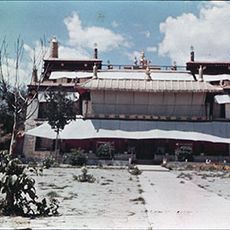
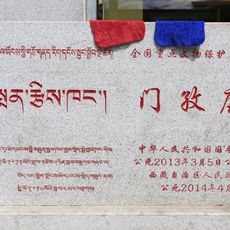
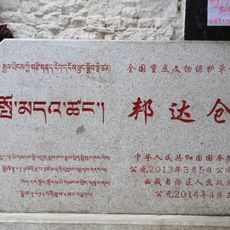
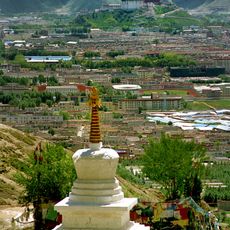
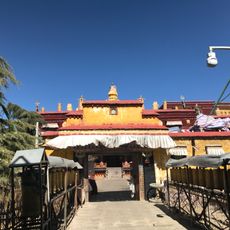
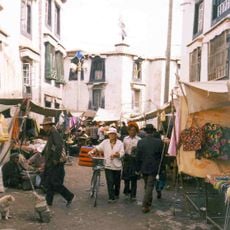
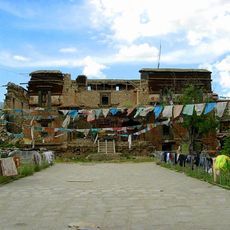
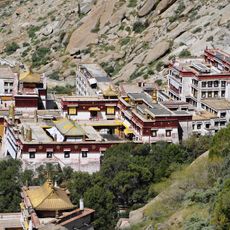
Nenang Nunnery, Buddhist temple in Gurong, China
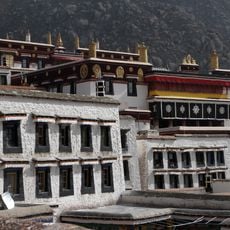
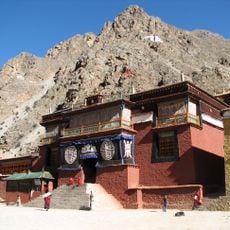
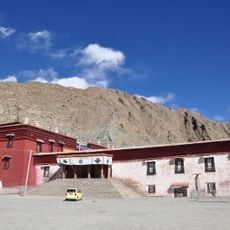
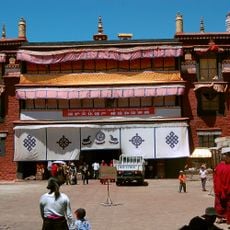
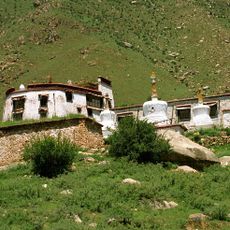
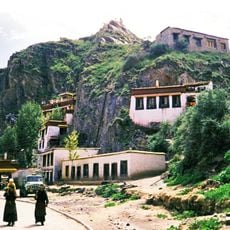
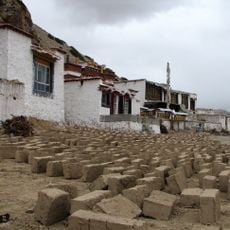
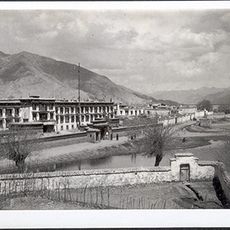
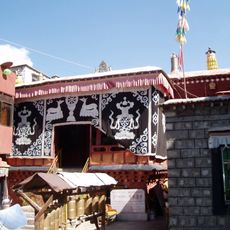
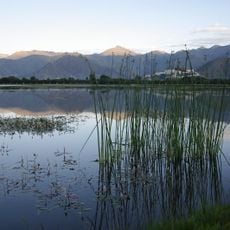
Nenang Nunnery, also called Nenang Gompa, stands at the end of a valley about 40 kilometres west of Lhasa in Doilungdêqên County. The present site consists of temporary huts built by nuns from the ruins of the former nunnery, which was locked up after 1959 and fell into disrepair. Above it rises Tsurphu Monastery, the traditional seat of the Karmapa, and a river runs through the valley.
Founded in 1333 by Tokden Drakpa Senge (1283–1349), the first Shamarpa of the Karma Kagyu school, Nenang became the seat of the Red Hat lineage. In 1930, under the Thirteenth Dalai Lama's direction, its nuns exchanged places with monks from Gnas sgo gdong. After 1959 it was closed and fell into ruins; nuns later returned to rebuild huts on the site.
The site is the seat of the Nenang Pawo, a tulku line of the Karma Kagyu school; the name Nenang is also written Nenang Gönpa in Tibetan. The historian Zurlachengwa (1503–1566), author of the "Feast for Scholars", was recognised as the reincarnation of the Pawo of Nenang. In 1930, by order of the 13th Dalai Lama, the nuns exchanged quarters with the monks of Gnas sgo gdong, after which Nenang became a monastery for monks.
The nunnery is located in a mountainous area west of Lhasa and can be reached via mountain roads that require careful navigation. Visitors should prepare for high-altitude conditions and expect a journey that takes time to complete.
The caves linked to Padmasambhava and the Sixteen Arhats lie in total ruins, so no meditation caves are visible today. The surrounding peak is called the Glorious Copper-Coloured Mountain, after Padmasambhava's celestial palace.
The community of curious travelers
AroundUs brings together thousands of curated places, local tips, and hidden gems, enriched daily by 93,850 contributors worldwide.