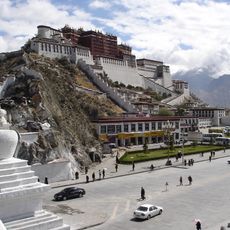
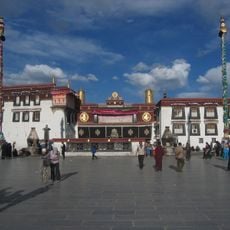
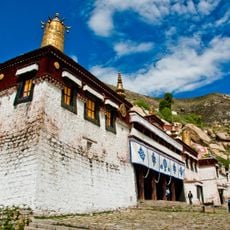
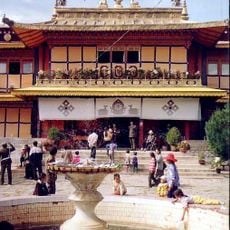
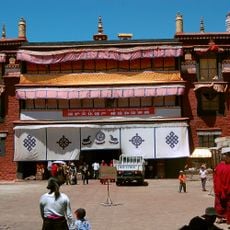
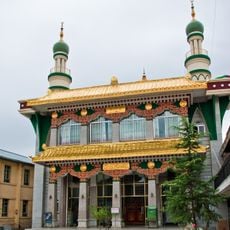
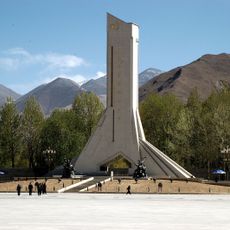
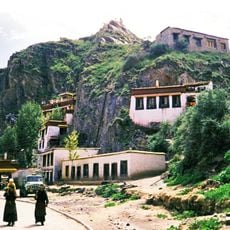
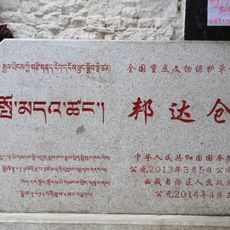
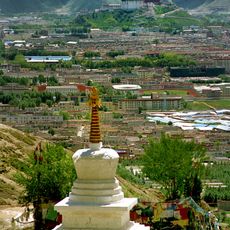
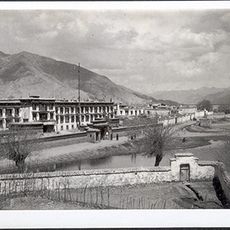
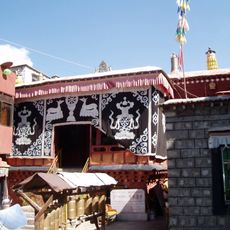
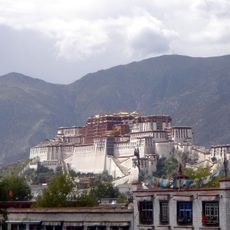
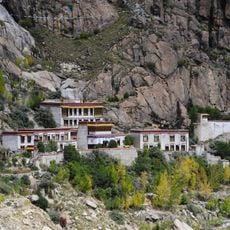
Tsomon Ling, Buddhist temple in Jêbumgang Subdistrict, China.
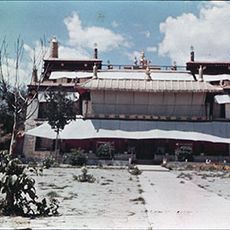
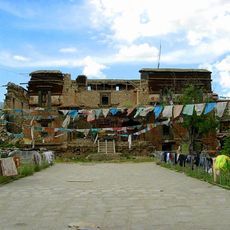
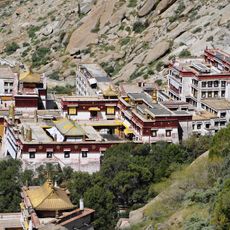
Tsomon Ling stands south of the Ramoche Temple at the corner of Dekyi Shar Lam. Its large courtyard is flanked on three sides by two-storey former monks' quarters now used as family homes. On the north side, the three-storey Karpo Podrang, built in 1777, holds the assembly hall, six chapels and the reliquary of Numan Qan I; the Marpo Podrang to the west contains an assembly hall, two protector chapels and a chapel of the eight Medicine Buddhas.
The temple was founded during the 17th century and later became one of four major religious colleges in the region. This status shaped how it was built and how people gathered there over time.
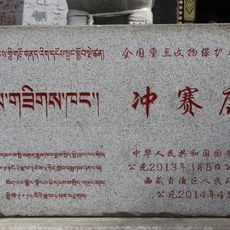
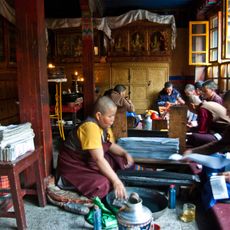
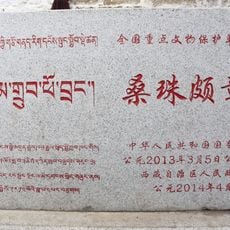
The name Tsomon Ling comes from a plaque the Jiaqing Emperor granted in 1812, when the temple was still called Tuden Rinchen Chökhor Ling. The assembly hall holds a chapel to the eight Medicine Buddhas and reliquaries of the third and fourth Nomun Qan Qutuqtus. Monks from this college were exempt from the Great Prayer Festival but still received alms by headcount.
The site is generally accessible on foot, though the courtyards and interior passages can be tight and uneven in places. Daytime visits are best since natural light helps you see the spaces and details clearly.
The complex adapted to modern city life by converting former monks' living quarters into homes while keeping its sacred functions intact. This transformation shows how an ancient religious center continued to serve people in changing times.
The community of curious travelers
AroundUs brings together thousands of curated places, local tips, and hidden gems, enriched daily by 93,146 contributors worldwide.