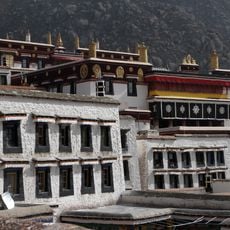
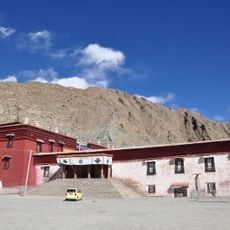
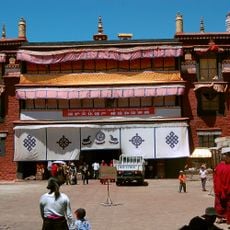
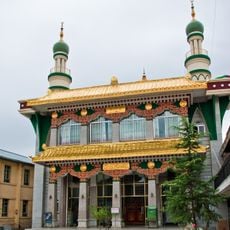
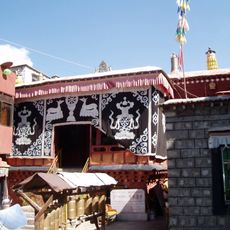
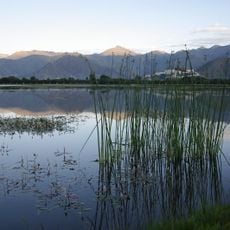
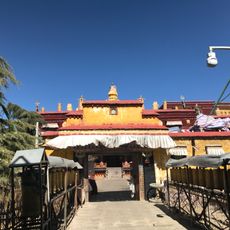
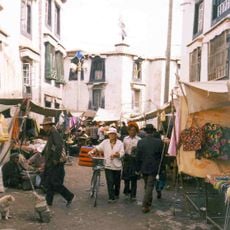
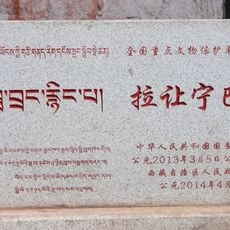
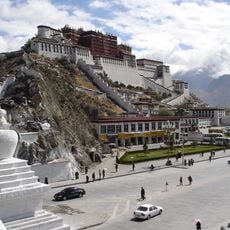
Catholic Church of Lhasa, Catholic church in Lhasa, China.
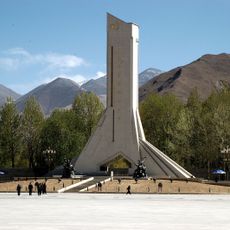
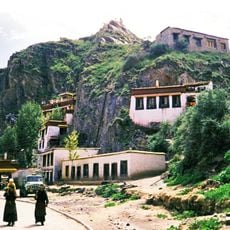
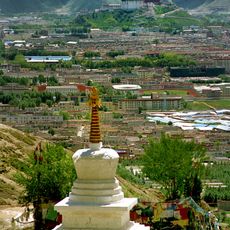
The Catholic Church of Lhasa is a place of worship in Tibet's capital city, featuring stone walls and traditional religious architectural elements throughout its structure. The building shows how Western church design has been adapted to exist within this specific geographical and cultural setting.
Capuchin missionaries reached Lhasa in 1708 and 1719; after a dispute with Jesuit Ippolito Desideri, the Holy See backed the Capuchins in 1721. The seventh Dalai Lama, Kelzang Gyatso, authorized construction on the city heights in 1726. Gelugpa lamas petitioned the Lhasa government, and the missionaries were expelled by 1745, when the church was destroyed.
The church was built after Kelzang Gyatso, the seventh Dalai Lama, authorized construction on the heights of Lhasa in 1726. Its congregation was mostly foreign residents of the city — Nepalis, Kashmiris and Han Chinese — and the mission counted up to 26 Tibetan converts near the end of its existence.
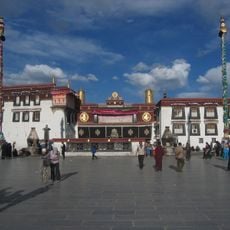
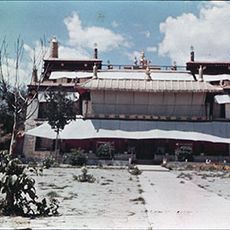
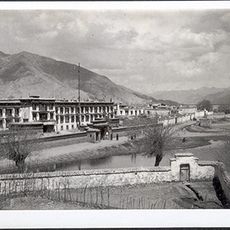
The church no longer exists: it was destroyed in 1745 after the Gelugpa lamas had the missionaries expelled, so there is no building to enter. A bell with a large crack shaped like an inverted "L" is kept at the Jokhang, where monks link the damage to Red Guards during the Cultural Revolution. A photograph dated 1956 appears in a book by Josef Vaniš and Vladimír Sis.
A bell with a large crack shaped like an inverted "L" is said by Jokhang monks to have been damaged by Red Guards during the Cultural Revolution; a 1956 photograph of the site appears in a book by Josef Vaniš and Vladimír SIS.
The community of curious travelers
AroundUs brings together thousands of curated places, local tips, and hidden gems, enriched daily by 94,022 contributors worldwide.