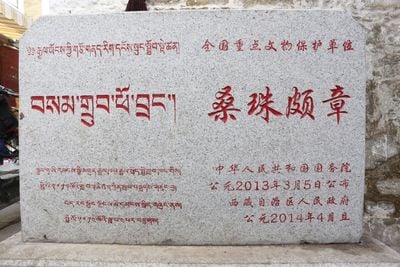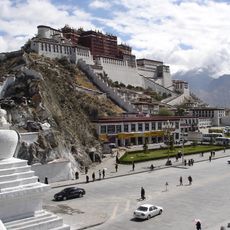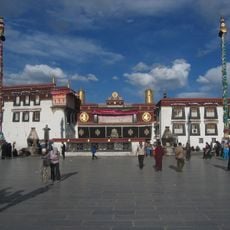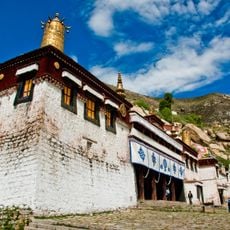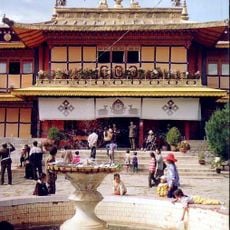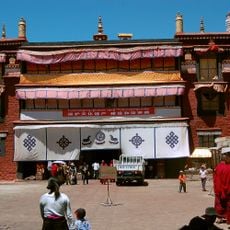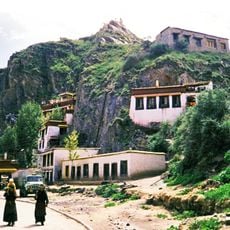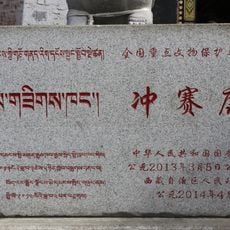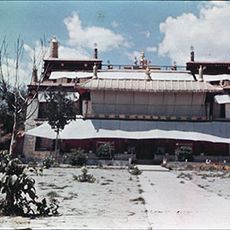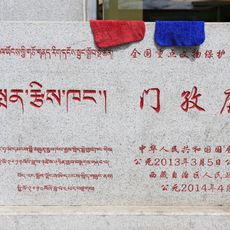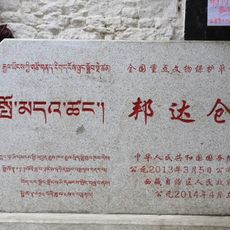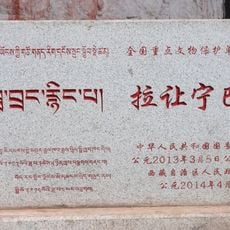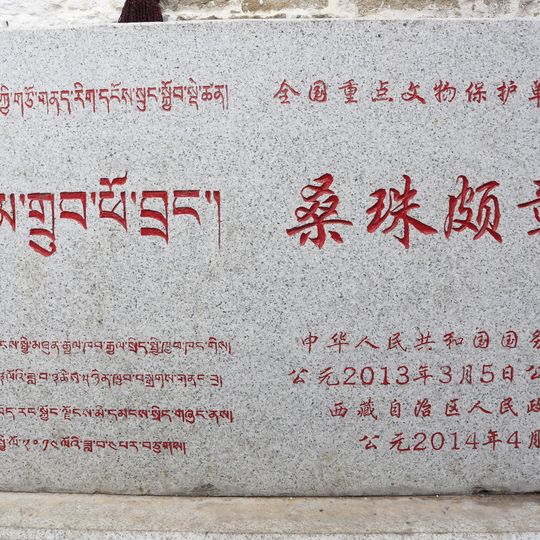
Samdrup Podrang, Protected heritage site in Barkhor South Street, Lhasa, China.
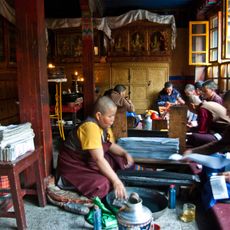
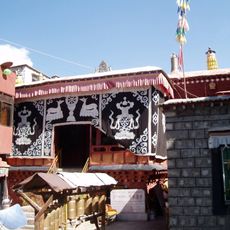
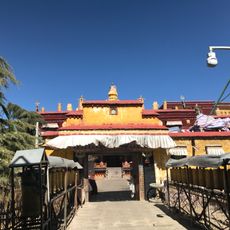
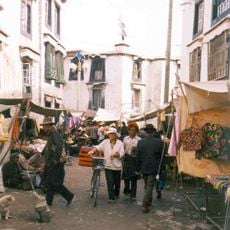
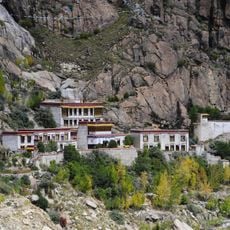
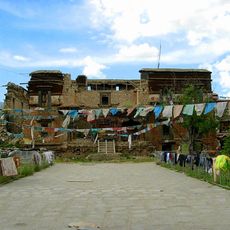
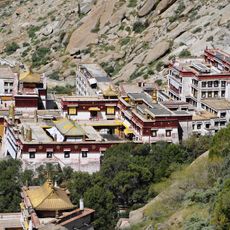
Samdrup Podrang is a three-story structure on Barkhor South Street displaying traditional Tibetan architectural features including white walls, black trapezoidal windows, and intricate wooden detailing throughout. The complex functions as residential quarters with a community health service station on the second floor and shops and teahouses nearby.
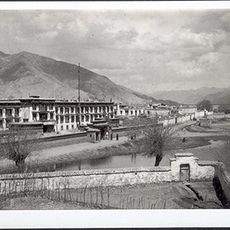
Built in 1642, it originally served as the residence of Gushi Khan, a Mongolian leader who ruled Tibet for roughly 80 years from this location. Its significance grew as it later became home to other influential families who maintained its standing as a seat of power.
The building displays a blend of Mongolian and Tibetan architectural influences that reflect its complex history. It housed prominent families whose connections to religious and political figures shaped its role as one of Lhasa's important residential centers.
The site sits centrally on Barkhor South Street and is easily accessible on foot, surrounded by local shops and teahouses. Daytime visits work best when the neighborhood is most active and architectural details are visible in natural light.
The estate earned recognition as one of the four principal family properties in the land after its inhabitants received ducal titles from Qing emperors. This elevation underscored its standing among Tibet's most important residences and its weight in the regional power structure.
The community of curious travelers
AroundUs brings together thousands of curated places, local tips, and hidden gems, enriched daily by 92,326 contributors worldwide.