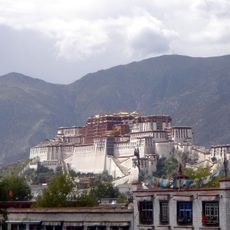
Purbuchok Hermitage, Buddhist monastery in Lhasa Valley, China
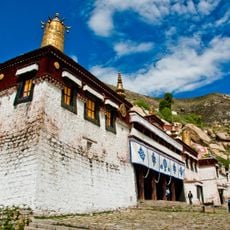
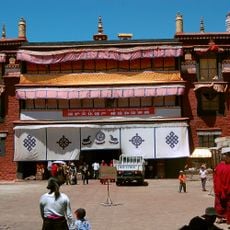
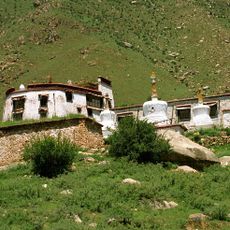
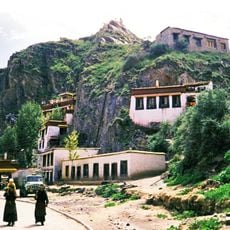
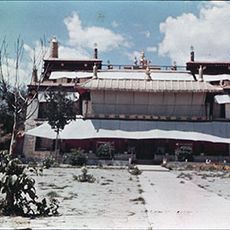
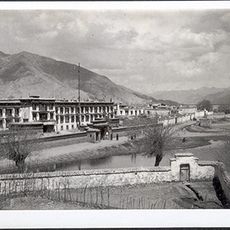
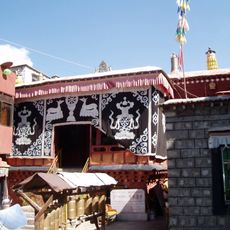
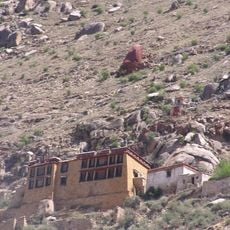
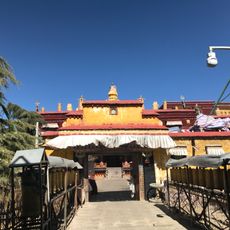
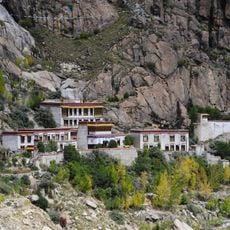
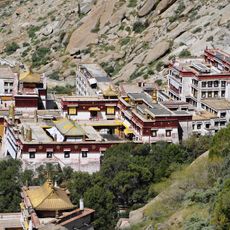
Purbuchok Hermitage stands on a hill spur behind Sera Monastery in the Dodé Valley north of Lhasa. Its three enclosures hold a three-tiered main temple with a yellow upper storey, the Temple of the Three Protectors with new statues of Avalokiteśvara, Mañjuśrī and Vajrapāni, and a library with a debating courtyard. Monk quarters and a Scripture Chapel adjoin the courtyards.
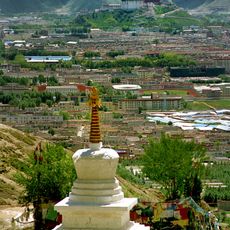
The site's earliest history reaches back to the 9th century, when Padmasambhava was said to have meditated in the cave known as the Cavern of Dochung Chongzhi. In the 12th century Zhang Drowé Gönpo Yudrakpa founded a practice centre here, giving the place the name Purchok, "a dagger at its pinnacle". Between 1701 and 1706 Drupkhang Gelek Gyatso located a white stupa at the spot, and his student Ngawang Jampa developed it from a cave with funds from regional benefactors. Destroyed in 1959, it was largely rebuilt from 1984.
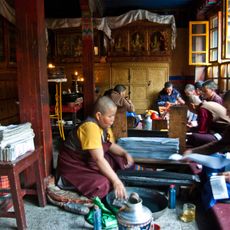
The monastery is home to a community of monks who carry out traditional Buddhist rituals and study philosophical texts as part of their daily practice. This place marks an important stop on a sacred pilgrimage route for believers visiting the region.
This location sits at high elevation, so visitors should allow time to adjust to the altitude and bring warm clothing for all seasons. It is wise to arrive early in the day to have enough time to explore the site and descend before nightfall.
The site is known for pilgrims who perform traditional circumambulations of the surrounding hills, which are revered as sacred protective places. This practice connects the location physically to a larger spiritual network across the region.
The community of curious travelers
AroundUs brings together thousands of curated places, local tips, and hidden gems, enriched daily by 93,917 contributors worldwide.